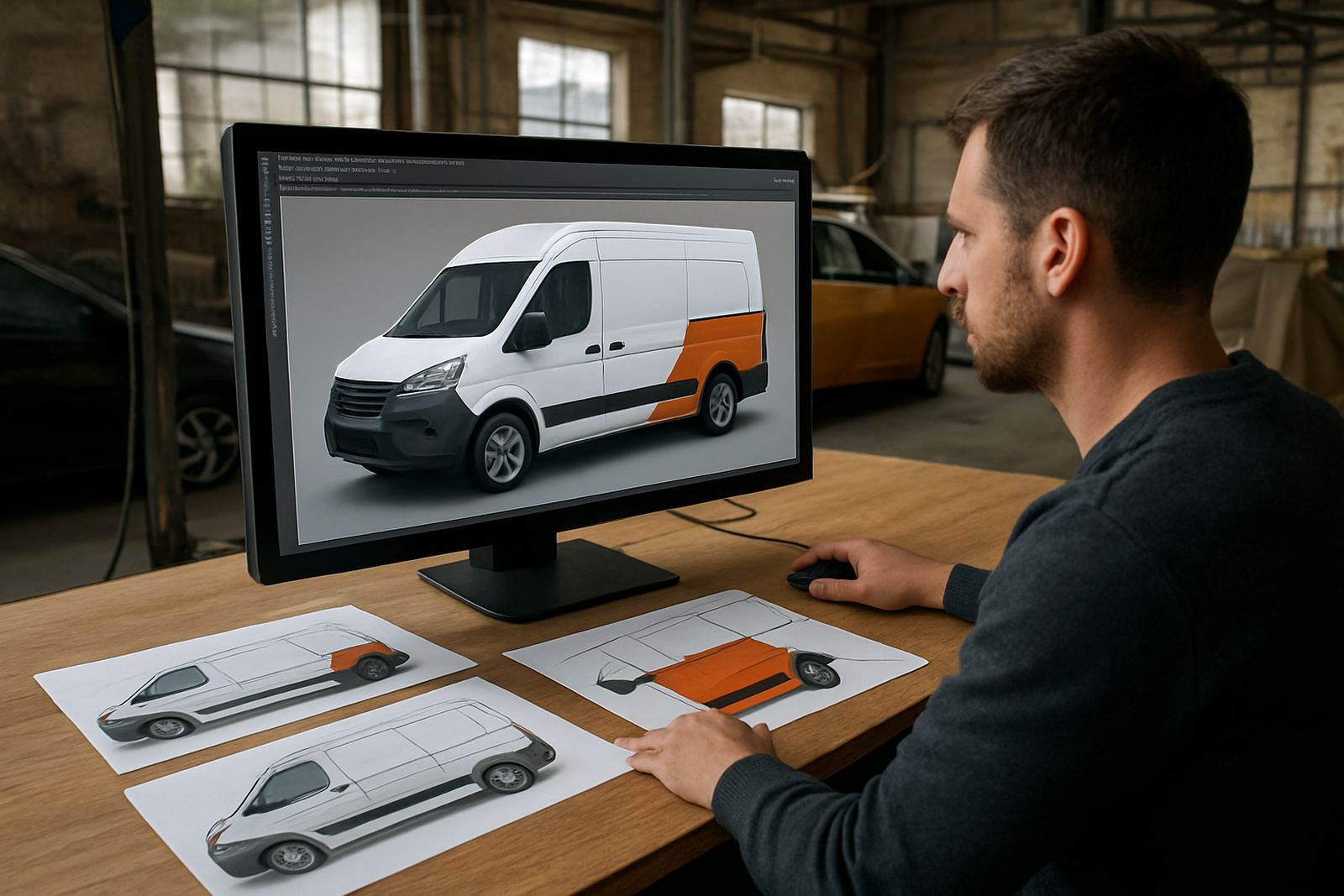
Wrap Layouts Built Around the Vehicle Shape
Every vehicle asks for a different layout. A small hatch, a bakkie, a panel van and a rigid truck all have different panel breaks, seams and viewing angles, so we do not force one artwork style across the lot. Our design and artwork service starts with the actual vehicle size, body style and usage, then we plan the graphics around the surfaces that carry the most visual weight.
For business fleets, we also keep branding consistent across units, even when the vehicle models differ. That means the logo, contact details, message blocks and key colours stay aligned from one vehicle to the next, with allowances for mirrors, fuel caps, sliding doors and tailgates. It saves time at install and keeps the fleet looking uniform on the road.
What Is Included in the Artwork Service
The service covers layout development, visual planning and print-ready artwork setup for wraps, partial wraps and fleet markings. We prepare the files to suit the chosen coverage, whether that is a full colour change, a branded commercial wrap, or a simpler door-and-tailgate treatment.
- Vehicle measurements and panel mapping
- Logo placement and contact detail layout
- Colour matching for fleet consistency
- Artwork scaling for doors, guards, bonnet and load areas
- Print file setup with bleed and trim allowances
- Revision checks before production
If the job includes fleet branding, we also lock in repeatable rules for font size, spacing and logo position. That way, the next vehicle can be built to the same standard without starting from scratch.
From Brief to Approved File
We keep the process straightforward. First we take the brief, the vehicle make and model, and any brand guide or reference images. Then we confirm what needs to be shown, what must stay off the wrap and where the important details should sit for street-side visibility.
- Step 1: Briefing and vehicle details
- Step 2: Measurement and surface review
- Step 3: Concept layout and revisions
- Step 4: Approval for production
- Step 5: Print handover and install scheduling
For fleet work, we can roll out a master layout first and then adapt it to the different body types in the group. That keeps the look consistent and reduces rework, which is useful when vehicles are already on a tight schedule.
Specs That Matter at Print and Install Stage
Good design is not only about how it looks on a screen. It must work on a vehicle that moves, flexes and picks up dirt, sun and road wear. We prepare artwork with wrap-safe sizing, panel overlaps and practical viewing distances in mind. In Johannesburg and the coastal areas, colour choice and finishing also need to take heat, UV exposure and humidity into account.
- Artwork resolution matched to final output size
- Bleed allowance for wrapped edges and returns
- Safe zones for handles, badges and panel gaps
- Readable text sizing for road viewing
- Fleet colour references for repeated jobs
- File checks for print and cutting accuracy
We can also advise on whether a gloss, satin or matt finish will suit the vehicle and the way it is used. Some finishes hide marks better, while others suit bright promotional work more clearly.
Turnaround Times and Job Planning
Turnaround depends on the complexity of the brief and the number of units in the fleet. A straightforward single-vehicle layout can move faster than a full brand rollout with multiple body shapes, sign-off rounds and print scheduling. For most standard jobs, we plan the artwork stage first so the install team is not held up later.
As a guide, simple layout work may take 1 to 3 working days, while more detailed fleet artwork can take several days longer, especially if there are many revisions or multiple vehicle types. If a site has vehicles moving in and out daily, we can phase the work so the first units go ahead while the rest follow in order.
We also plan around load-shedding, production queues and vehicle downtime so you do not lose working hours without need. If the job is urgent, tell us early and we can advise what is realistic.
Pricing Approach for Artwork and Planning
Artwork pricing depends on the amount of design work, the number of revisions, the number of vehicle types and whether a fleet standard must be created. A single unit with clean branding is priced differently from a national fleet with several variations and repeat setups.
We quote in a practical way, based on time, complexity and production risk. If existing brand material is usable, that lowers the setup work. If logos need redrawing, measurements taken from scratch or multiple concepts prepared, the cost will reflect that. Where needed, we can separate design from production so you know exactly what is being charged at each stage.
No one wants surprise costs after approval, so we keep the brief clear before starting. That includes number of vehicles, expected revisions, finish type and any special placement needs for municipal or site compliance.
Aftercare, Revisions and Reprint Control
Once the artwork is approved, we keep the master files organised for future units, touch-ups and replacement panels. That is especially useful for fleet operators who add vehicles later or need a panel reprinted after damage. We also provide aftercare guidance so the wrap stays presentable after install.
- Wait before washing the vehicle after install
- Avoid strong solvent cleaners on fresh wrap edges
- Use gentle wash methods around seams and corners
- Check edges after long highway use or pressure washing
- Plan maintenance inspections every 6 to 12 months
In coastal humidity or heavy sun, it helps to inspect high-wear areas a bit more often. If something shifts, lifts or needs replacing, having the original artwork on hand saves time and keeps the vehicle looking tidy.
Key facts
| Service type | Vehicle wrap design and artwork planning |
|---|---|
| Base area | Kya Sand, Johannesburg |
| Coverage | Single vehicles, small fleets and larger commercial fleets |
| File output | Print-ready artwork with bleed, trim and safe zones |
| Typical turnaround | 1 to 3 working days for simple layouts, longer for fleet rollouts |
| Maintenance interval | Inspection every 6 to 12 months, depending on use and climate |