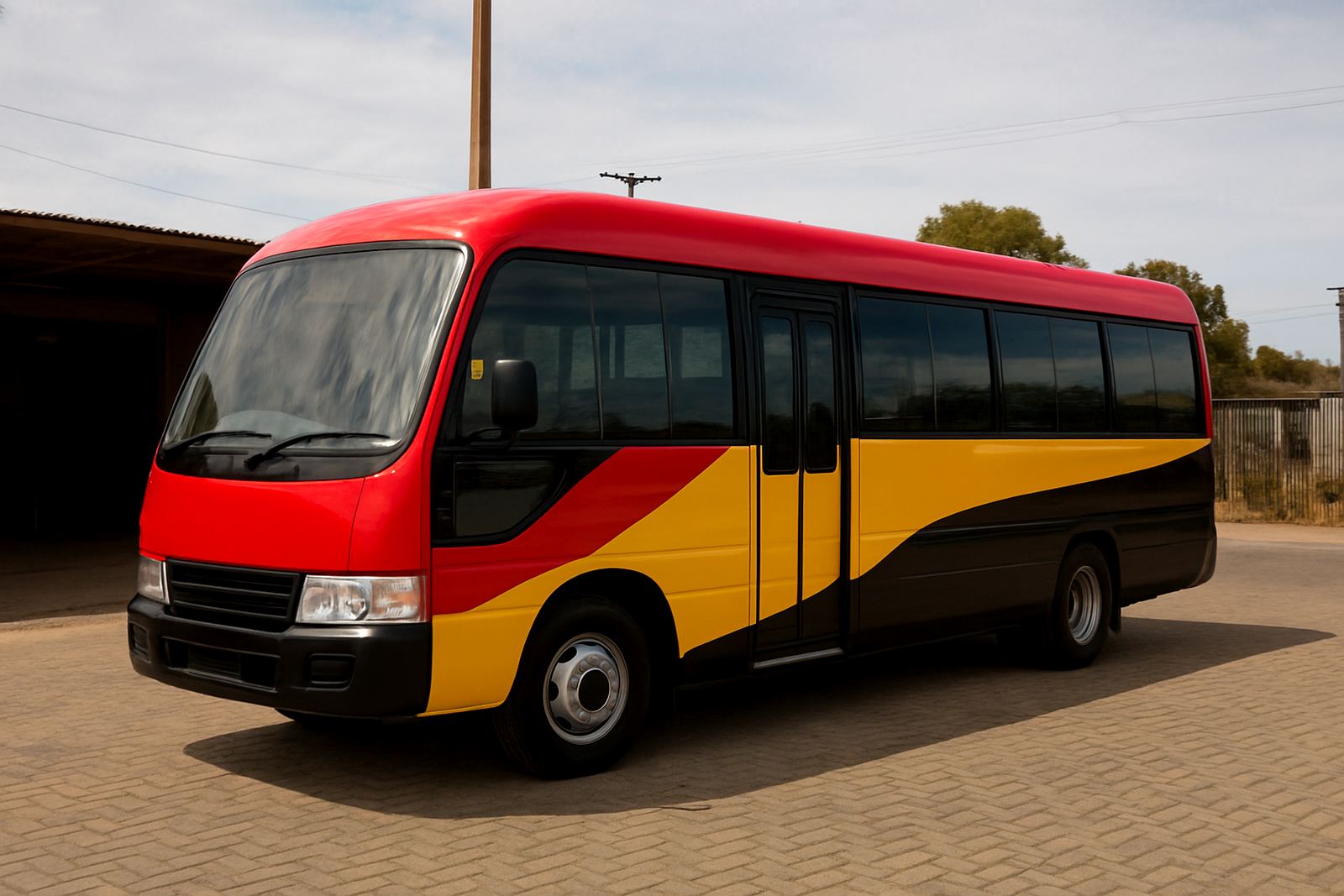
The Brief From A Busy Soweto Route
The client was a local shuttle operator working across Soweto and nearby commuter points, carrying passengers on a fixed route with frequent stops and a lot of short-distance visibility. The vehicle already did good work for the community, but from a distance it was not clear enough which shuttle it was, where it ran, or how to identify it quickly in traffic.
The brief was straightforward. Make the vehicle easy to recognise at a glance, use strong route cues, and keep the finish practical for daily use. It had to look organised at the taxi rank, still read well in morning traffic, and hold up to constant washing, sun, dust and regular loading. The operator also wanted a solution that would not need repainting or long downtime, as the vehicle was earning every day.
- Project type: full exterior wrap for a community shuttle bus
- Area served: Soweto and surrounding commuter routes
- Main goal: stronger route recognition and cleaner fleet presentation
- Use case: high-frequency passenger transport with daily wear
Planning The Layout For Fast Route Recognition
Before we touched the bus, we mapped the side views, rear panel and entry side so the route name could be read quickly from a moving car or while the shuttle was standing still. For a vehicle like this, readability matters more than decoration. People need to understand the route in a second or two, not after staring at it.
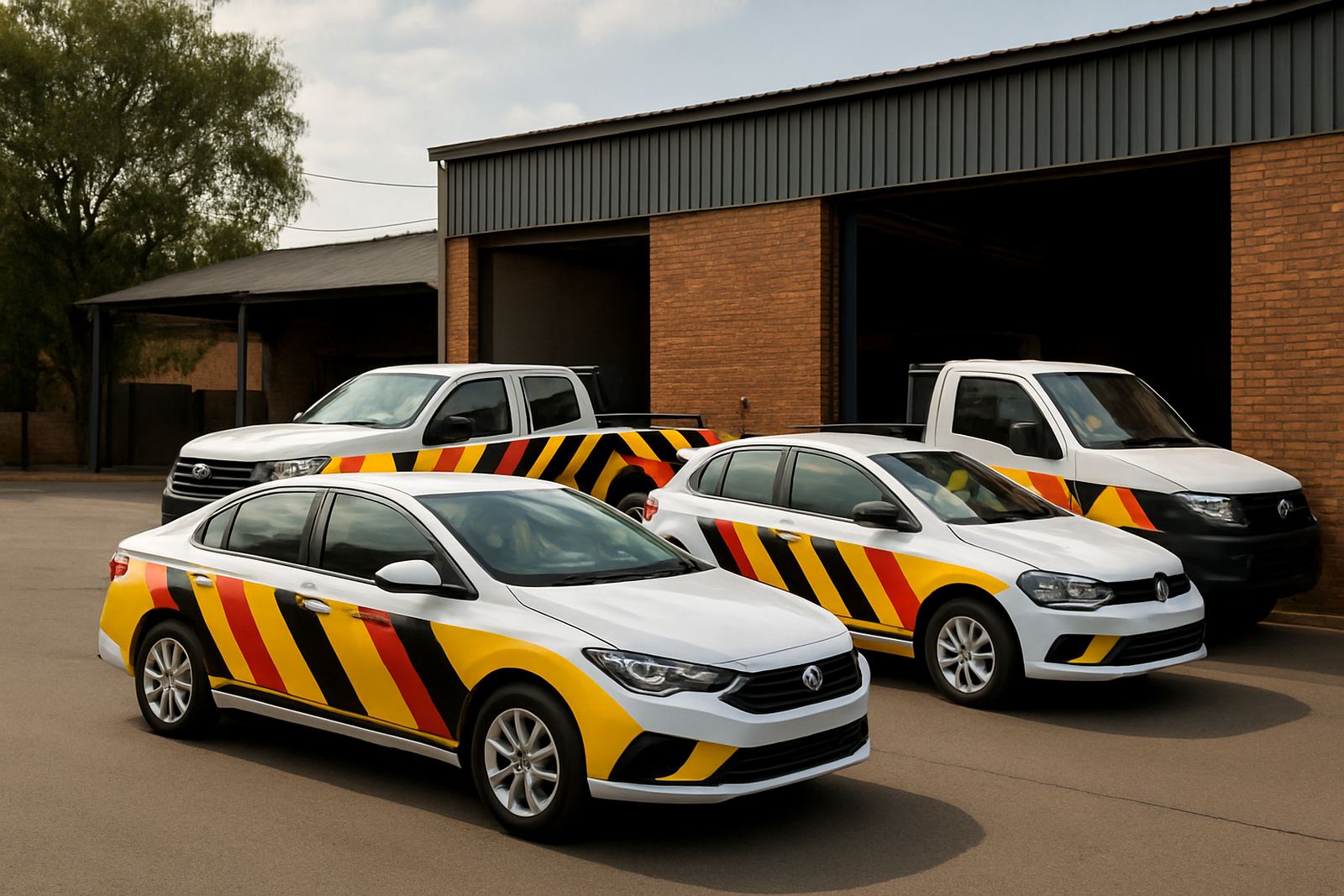
We built the artwork around high-contrast panels, large route wording and clear contact details. The design needed enough presence to stand out in heavy traffic, but still remain practical for a working shuttle. We also checked the placement of door handles, windows, rub rails and panel joins so the message would not break across awkward seams. That saved time during fitting and kept the final result neat.
- Artwork prepared for side, rear and entry-side visibility
- Large route wording for quick identification
- High-contrast colour blocks for distance reading
- Layout adjusted around doors, trims and panel joints
Surface Prep And Fitment In Kya Sand
The shuttle came to our Kya Sand base for preparation and fitment. Because these vehicles are often washed hard and run long hours, prep is where the job is won or lost. We cleaned the panels carefully, removed road film, checked problem areas and made sure the surface was ready for adhesion. Any trapped dust or residue would show up later, especially on large flat panels.
Our lead wrapper handled the main installation with support from the production team. The panels were aligned in stages so the long side sections sat straight from wheel arch to rear quarter. Around the edges we used controlled heat and post-heating where needed, particularly on curves and recessed areas. That helps the vinyl settle properly and reduces the chance of lift on vehicles that spend their life in sun and wind.
- Full exterior wrap installed on the main body panels
- Prep carried out before any vinyl was applied
- Edge work and recesses finished with heat control
- Final check done on joins, corners and door movement
Materials Used For Daily Shuttle Duty
For a community shuttle, the material choice has to suit South African conditions. The bus spends time in strong sun, dusty roads, wet weather and stop-start use, so we used vinyl suited to regular outdoor exposure and frequent cleaning. The finish had to stay neat and readable, not just look good on handover day.
We also made sure the print and cut sections matched the panel shape properly, with clean edge alignment around the windows and lower body line. The rear panel was treated as a key communication point, because that is what people see first when the shuttle pulls away or queues at rank side. The result was a tidy, practical wrap with clear route identity and less visual clutter. Simple, but effective, and that is what this job needed.
- Outdoor-grade vinyl for daily passenger transport use
- High-visibility route graphics on side and rear panels
- Clean finish around windows, handles and mouldings
- Suitable for regular washing and township road conditions
Timeline And Turnaround
This project ran over two weeks from brief to completion. The first week covered measure-up, artwork setup and approval, while the second week covered print finishing, surface prep and fitment. For an operator that depends on the vehicle every day, that timing mattered as much as the design itself.
We kept the process simple for the client. Once the artwork was approved, we scheduled the vehicle into our wrap bay and worked through the installation without dragging out the downtime. After fitment, we checked visibility in daylight, confirmed that the route wording was readable from a distance, and made sure the door openings and body lines still worked as they should. A shuttle like this needs to go back into service quickly, not sit around for no reason.
- Total turnaround: 2 weeks
- Week 1: measurements, layout and artwork approval
- Week 2: production, preparation and installation
- Final sign-off: visibility and finish inspection
What The Shuttle Gained On The Road
The biggest change was instant route identity. The shuttle now reads properly from both sides and from behind, which helps passengers and road users recognise it faster. That is useful at busy loading points, but it also helps the operator look more organised and dependable when parked outside shops, schools or transport nodes.
The vehicle also looks cleaner and more intentional now. The wrap gives the bus a proper fleet presence without the cost and downtime of a respray. It protects the original finish underneath as well, which is handy when the vehicle is used hard and has to keep earning. A good wrap should do more than advertise, it should help preserve the vehicle too.
If we were doing this one again, we would keep the same approach: simple message, strong contrast, clear route reading and practical panel planning. For community transport, that formula works well because people do not have time to figure things out slowly. They need to see the route, know the shuttle and move on with confidence. That is what this project delivered.
- Improved route recognition at rank side and in traffic
- Cleaner, more professional fleet presentation
- Original paint protected under the wrap
- Low-downtime solution compared with repainting
Key facts
| Project | Full exterior wrap for a community shuttle bus |
|---|---|
| Client type | Local passenger transport operator |
| Area | Soweto, Gauteng |
| Turnaround | 2 weeks from brief to completion |
| Service scope | Design, artwork, prep, vinyl installation and aftercare |
| Key outcome | Stronger route recognition and improved road visibility |