
What Front End PPF Covers
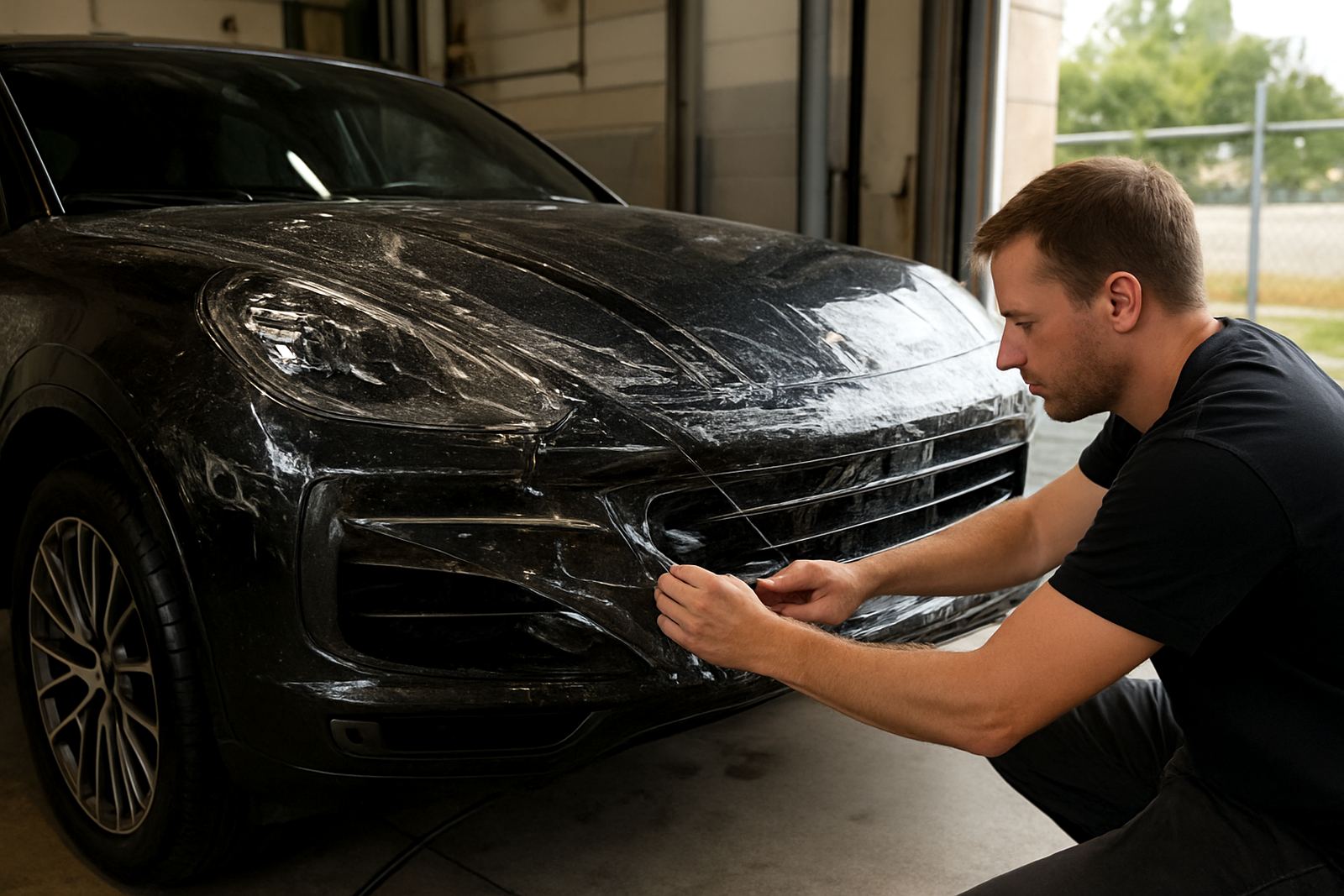
Front End PPF is a clear paint-protection film applied to the leading sections of a vehicle where damage usually starts first. These areas are the bonnet, front bumper, front fenders, side mirrors and, where requested, the headlights and lower apron sections. It is a practical choice for Johannesburg traffic, highway mileage and gravel roads where chips happen fast.
The film is designed to take the scuffs and stone strikes instead of the paint underneath. It helps slow down visible wear, keeps the front end neater and can reduce the need for early resprays. On darker vehicles especially, small chips and sanding marks show up quickly, so front coverage often makes sense sooner than later.
- Clear protection for painted front panels
- Optional coverage for headlights and mirror caps
- Suitable for private vehicles and company fleets
- Useful on new vehicles and recently resprayed panels
Sizes, Coverage Options and Film Thickness
Front End PPF is usually supplied in coverage packages rather than one fixed size, because each vehicle shape is different. A partial front package may cover the bumper, partial bonnet and partial fenders, while a full front package extends further up the bonnet and across the full leading edges. For vehicles with strong highway use or high-value paintwork, a larger coverage area is often the better call.
Film thickness generally ranges from around 6 mil to 8 mil depending on the chosen product and the target use. Thicker film gives more resistance to impact but can be slightly more visible around sharp edges if the surface is not prepared properly. We check panel shape, badge placement and access points before recommending the right coverage, because a bakkie, sedan and SUV do not all need the same layout.
- Partial front package for everyday use
- Full front package for more complete protection
- Optional add-ons for headlights, mirrors and door cups
- Custom cut patterns available for specific vehicles
Where It Suits Best
This product suits drivers who spend time on Gauteng highways, travel between industrial areas, or keep vehicles on the road for business. It is also a smart option for family cars that do school runs, weekend trips and regular shopping routes where small stones and debris still make a mess of the front end. In Durban, coastal humidity and salt in the air make regular wash care important, while inland dust and heat can also be hard on unprotected paint.
Front End PPF is especially useful on vehicles with dark paint, metallic finishes or high resale expectations. Fleet managers often choose it for service vehicles, branded cars and executive units because the front end is the first area clients notice. It also helps on cars that are kept long term, since the paint under the film stays cleaner and less marked by daily use.
- Private cars and SUVs
- Bakkies, vans and light commercials
- Fleet vehicles with higher mileage
- New deliveries before chips start showing
Installation Conditions and Site Requirements
PPF installation needs a clean, enclosed bay with good lighting and controlled dust. The vehicle must be washed, decontaminated and dried before fitting, then panels are wiped and checked again for tar, polish residue or fine grit. We use heat, squeegees and positioning tools during installation, so electricity is needed for lighting and heat equipment, but no gas supply is required.
For best results the surface should be cool and out of direct sun. On very hot days the adhesive can grab too fast, which makes alignment harder. At our Johannesburg base in Kya Sand and at wrap bays nationwide, the work area is set up to handle clean prep, curing and final inspection. If a vehicle arrives straight from the dealership or panel shop, we check that the paint has cured properly before fitting film.
- Enclosed clean bay with strong lighting
- Single-phase electrical supply for tools and lighting
- No gas requirement
- Controlled temperature and low dust levels
Care After Fitting and Ongoing Service
Once fitted, the film should be left alone for the first settling period so edges can bond properly. After that, washing is simple. Use a pH-neutral shampoo, soft wash mitt and clean microfibre cloths. Avoid harsh solvents, abrasive polishes and stiff brushes on the film. On vehicles that do long distance work or sit outside, it is worth checking edge lift, dirt build-up and any scuffing every few months.
Front End PPF is low maintenance, but it is not maintenance free. If tar, insect residue or road film is left too long, it can stain the surface and make cleaning harder. We advise owners to bring the vehicle in for a quick check if they notice lifting near panel edges or if the car has picked up a hard impact. Minor marks can often settle with gentle heat, but deep stone strikes may need panel replacement.
- Wash with mild shampoo and soft cloths
- Do not use cutting compounds on the film
- Inspect edges after long trips or fleet rotations
- Ask for a check if the vehicle takes a heavy impact
What to Check Before You Order
Before ordering, confirm the exact vehicle make, model, year and trim level, because front bumpers and bonnet lines can change from one variant to the next. You should also decide whether you want partial or full front coverage, and whether headlights, mirrors or fog light surrounds should be included. If the vehicle has had a recent respray, ask how long the paint has been curing before fitting is booked.
It also helps to tell us how the vehicle is used. A car doing airport runs around Sandton may need different coverage from a delivery unit on the N1, and a bakkie used on site roads may need more front-end protection than a weekend vehicle. If you are pricing for a fleet, keep the vehicle count, turnaround dates and branding requirements ready so the fitment can be scheduled without delays.
- Vehicle make, model, year and trim
- Coverage level required
- Any headlight or mirror protection needed
- Paint condition and any recent body repairs
Key facts
| Film type | Clear paint-protection film for front impact areas |
|---|---|
| Typical thickness | Around 6 mil to 8 mil |
| Coverage options | Partial front, full front, headlights, mirrors and custom add-ons |
| Install environment | Clean enclosed bay with strong lighting and controlled dust |
| Power requirements | Single-phase electricity for tools and lighting |
| Gas requirement | None |
| Care interval | Wash regularly and inspect edges every few months |