
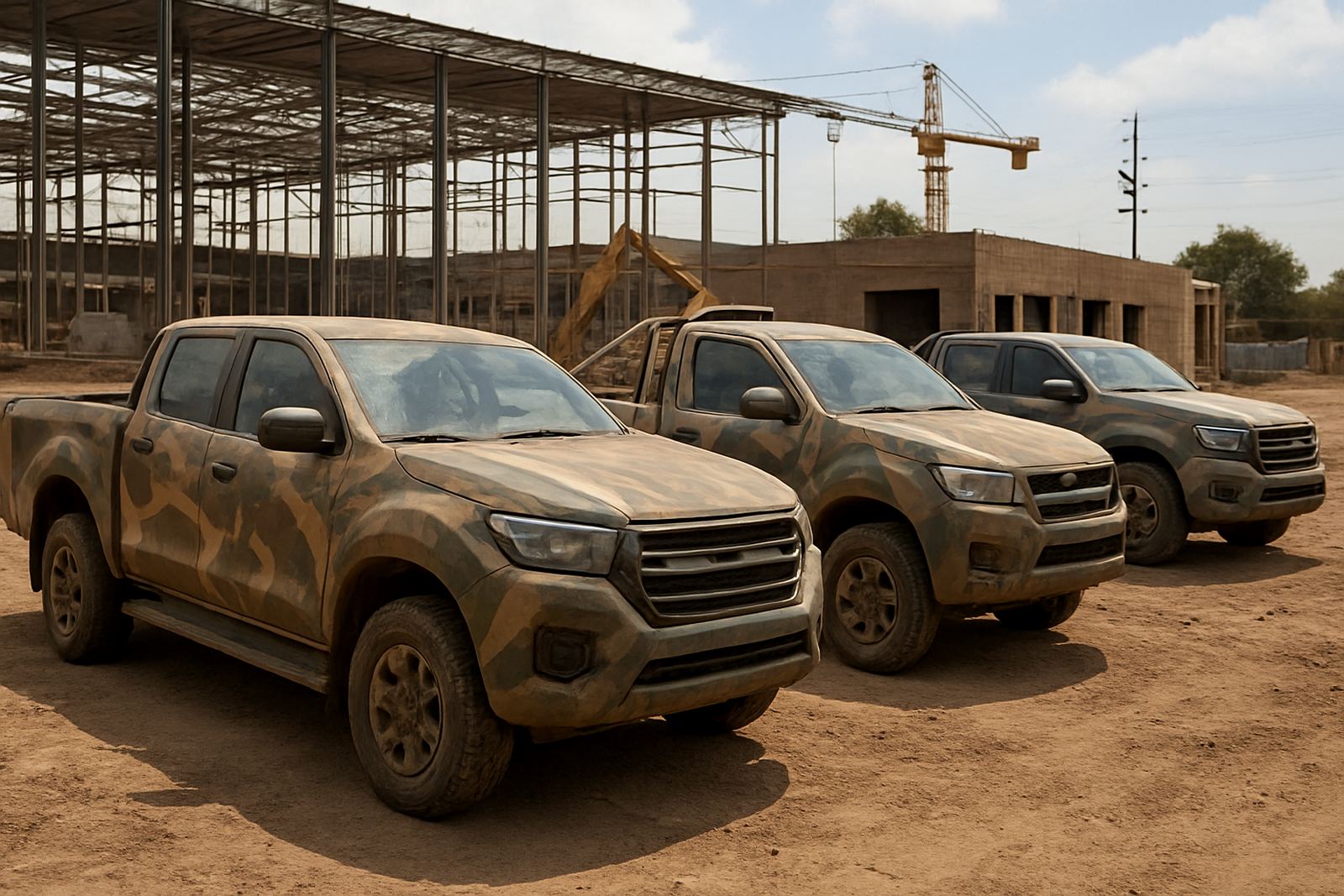
What Construction Fleets Need On The Road
Construction vehicles spend their days on gravel, tar, mud, dust and tight site entrances, so the wrap has to look good and still take punishment. Site bakkies, crew transport, panel vans, light trucks and traffic support units all need clear branding that can be read from a distance and still hold up in sun, rain and constant washing.
For many contractors the vehicle is more than transport. It is a mobile signboard, a trust signal for clients and a practical way to show who is on site. We see a lot of fleets that need consistent branding across mixed vehicle types, with room for registration details, emergency numbers, project references and safety markings. Good planning at the start saves money later because a badly set layout leads to patchy branding and repeated rework.
Typical Vehicles, Tools And Fleet Setups
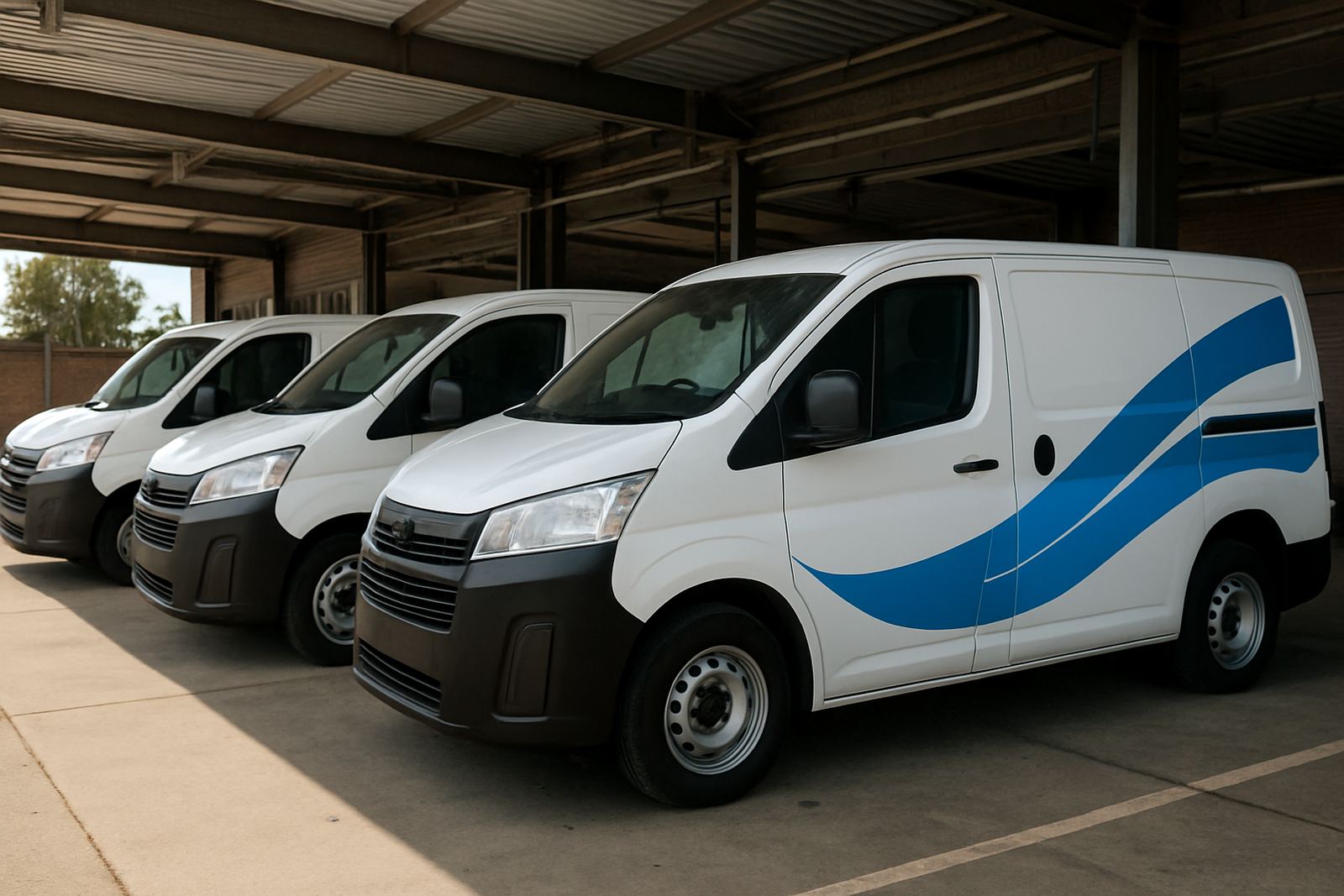
Construction fleets vary from a few branded bakkies to larger mixed fleets moving between sites in Gauteng, KwaZulu-Natal and the Western Cape. The usual set includes double cabs, single cabs, panel vans, flatbeds, service trucks and site support vehicles. Some companies also want supervisors' cars, forklifts, trailers and generator or compressor units branded so everything matches on delivery.
- Bakkies for supervisors, foremen and site visits
- Vans for tools, fittings and small plant transport
- Light trucks for materials, scaffolding or equipment movement
- Project transport vehicles for crew runs and pickups
- Trailers and utility units for temporary site support
We can also fit interior wraps for cab areas, tinting to cut glare and heat, and paint-protection film on high-wear panels like door cups, loading edges and sills. That helps on dusty sites where doors are opened all day and paint gets scratched by boots, tools and loose material.
Planning The Layout Before Vinyl Goes On
A construction fleet needs a layout that stays consistent even when vehicles differ in size. The artwork should work on a bakkie, a panel van and a truck without forcing the logo to shrink too far or the contact details to sit where they cannot be seen. We plan for door gaps, handles, fuel caps, beacons, ladder racks and canopy lines before production starts.
It also helps to separate the message into what matters most. The business name and phone number should be visible first, then the service list and registration details if required. If the fleet carries project names or subcontractor information, we keep those elements easy to update so you are not stripping and replacing full panels every time work changes. That saves time and keeps the fleet looking tidy.
- Keep key contact details on both sides and the rear
- Use high contrast colours for dusty or low light sites
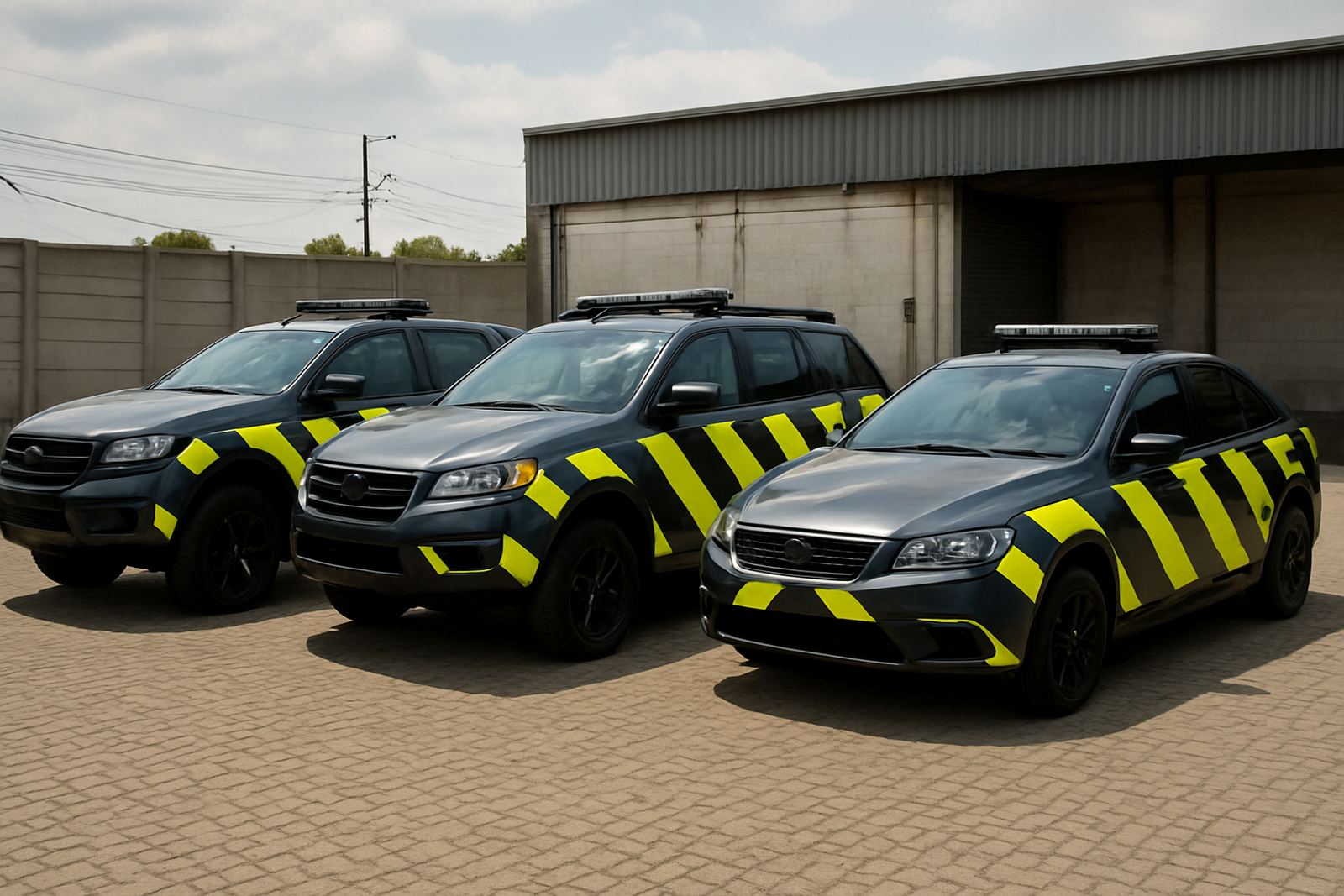
- Allow space for reflectors, chevrons and safety labels
- Plan for mixed vehicles so the design scales cleanly
Wrap Options That Suit Construction Conditions
Vinyl colour changes work well when a company wants a standard fleet colour without repainting. Full wraps suit businesses that want stronger branding or need to cover older paintwork, while partial wraps and cut graphics are often enough for newer vehicles. On commercial fleets we often combine branding with surface prep, so the wrap sits properly and lasts better on panels that have seen repairs or hard use.
Paint protection film is worth considering on the front end, mirrors, loading edges and stone-hit areas. Window tinting can cut heat in standstill traffic and reduce glare for drivers moving between sites. Where fleets need a smarter cab area, interior wraps can refresh trim and protect panels from scuffs. Wheel refurbishment is also popular for vehicles that need to look presentable in front of clients, not just on the site road.
Common Mistakes That Cost Money Later
The biggest mistake is treating every vehicle as if it is the same shape. A design that looks fine on a Hilux style bakkie can fail on a van with sliding doors or a flatbed with tool lockers. Another common issue is putting too much text on the sides, which makes the fleet hard to read at speed and ends up looking cluttered.
We also see wraps installed without enough surface preparation. Dust, oil, old adhesive and poor paint repairs can all shorten the life of the vinyl. On construction fleets, pressure washing is common, so edge sealing and proper fitting matter. If the vehicle works near the coast or in humid areas, that matters even more because moisture can work into weak edges and lift them sooner.
- Do not use tiny fonts for phone numbers or licence details
- Do not wrap over failing paint or untreated rust
- Do not mix too many colours and leave no clear hierarchy
- Do not forget roof panels on vehicles seen from upper floors or gantries
Budget Ranges For Site Vehicle Branding
Budget depends on vehicle size, the amount of coverage and whether you are doing full fleet standardisation or just the most visible units. As a working guide, cut graphics and simple branding on a bakkie can start from about R3 500 to R8 500. Partial wraps and more detailed setups often sit between R8 500 and R18 000 per vehicle, while full wraps and larger commercial units can run from R18 000 to R35 000 or more depending on prep and coverage.
Fleet work is usually best priced as a rollout, not one vehicle at a time. That gives you consistency across the fleet and allows us to schedule production around site demands, load-shedding windows and vehicle availability. If you are adding tinting, PPF or wheel work, we can group the jobs so the vehicle spends less time off the road and the finish matches across the line-up.
How Auto Wrap SA Handles Fleet Projects
Our Kya Sand base in Johannesburg supports projects from Sandton, Midrand, the East Rand, Pretoria and Durban, with wrap bays available nationwide. For construction fleets, we coordinate artwork, fleet brand standard, surface preparation, vinyl installation, wrap removal and aftercare support so the handover is practical for busy operations teams.
Sibusiso Nkosi leads the business, with Onalenna Sekhukhune handling operations, Johan van Wyk on lead wrapping, Ayanda Mabena coordinating fleet projects, Dhivana Bhana on sales, Tshepo Mabaso on PPF and tint, and Candice Petersen managing artwork and production. That means one contact point, proper planning and a team that understands site deadlines, vehicle rotation and the need to keep the fleet earning. If your vehicles must be ready for Monday morning, we plan backwards from that deadline, not forwards.