

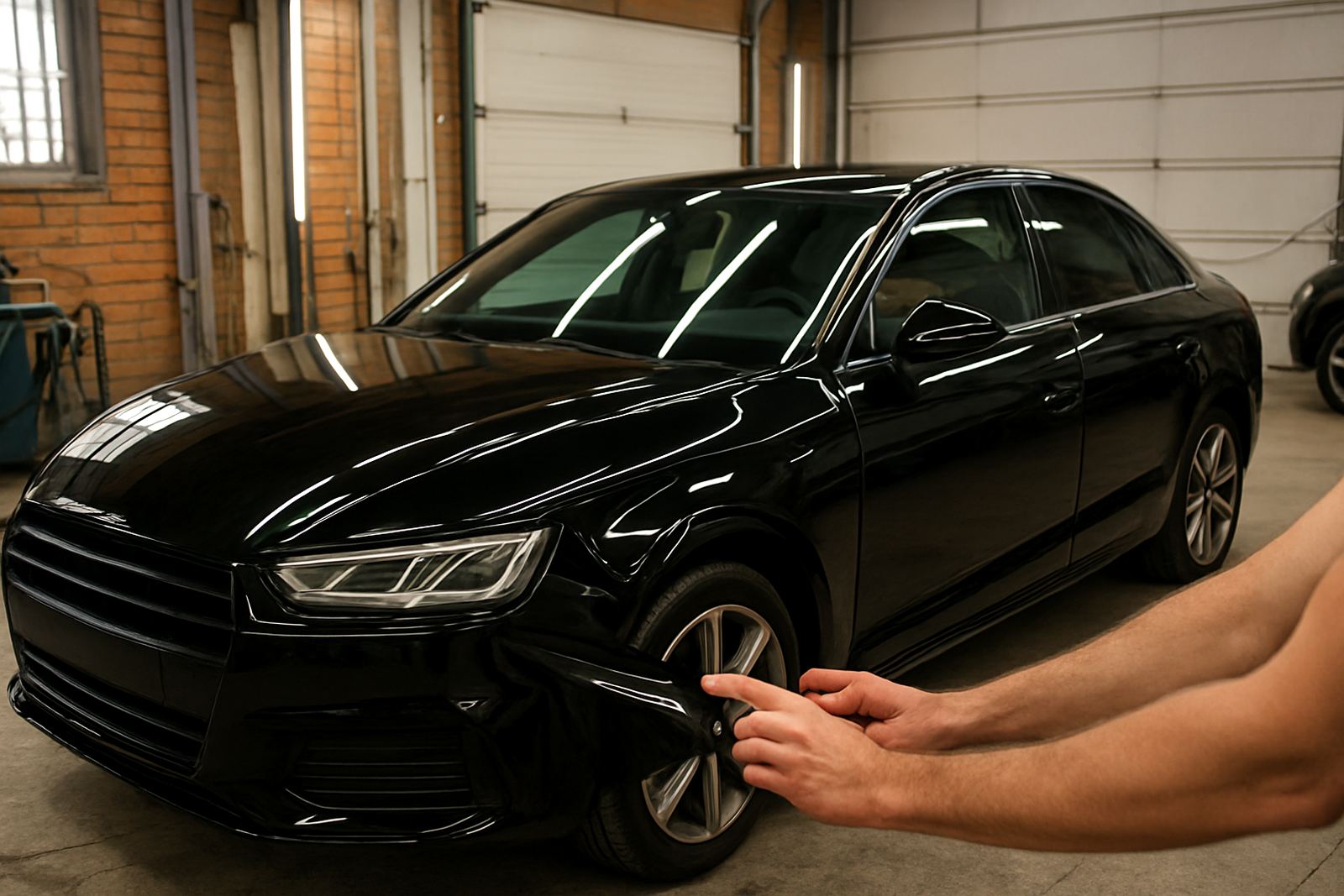
How gloss wraps show swirl marks
Gloss vinyl shows everything. Fine scratches, towel drag, dirty wash mitts and even dry dusting can leave a light haze across the finish. On a dark vehicle, that pattern is often most visible in the sun at midday or under parking bay lights after work.
South African conditions make the problem worse. In Johannesburg and Pretoria, fine dust settles fast. In Durban, salt in the air can sit on the surface and hold grime. If a vehicle is used for site visits, deliveries or school runs, the paint-like finish gets touched and washed far more often than many owners expect.
The best protection is not a special polish. It is a careful routine from day one, plus the right habits between washes.
Start with the right wash routine, not just water and soap
A gloss wrap should be washed with clean water, a pH-neutral vehicle shampoo and separate mitts or cloths for dirty lower panels. A single sponge used on the whole car will pick up grit from the sills and drag it across the bonnet and doors. That is where swirl marks begin.
Work from the top down and rinse often. If the vehicle has been driven through summer rain, road film or weekend dust, give the surface a proper pre-rinse before touching it. This lifts loose particles away so they do not scratch the film.
- Use two buckets if possible, one for wash mix and one for rinse water.
- Keep a separate mitt for bumpers, lower doors and tailgates.
- Wash in the shade so soap does not dry on the film too quickly.
- Rinse panel by panel on hotter days, especially in full sun parking areas.
Drying is where many gloss finishes get marked
Drying a wrap with an old bath towel is one of the quickest ways to ruin the finish. The fibres can trap grit and leave fine arcs on the film. Instead, use a clean microfibre drying towel and blot or glide lightly over the surface with very little pressure.
If the vehicle is fleet-branded and washed daily, it helps to keep a colour-coded cloth set in the boot or wash bay. That way, the same cloth is not used for wheels, door shuts and the visible panels. Small habits like this save money later because the wrap stays cleaner looking for longer.
Never let standing water bake onto the vehicle after a wash if you can avoid it. Water spots can leave marks that need extra rubbing to remove, and extra rubbing is what creates swirl in the first place.
What to avoid if you want the gloss to stay deep
Gloss film does not like harsh treatment. Automatic brushes, abrasive polishes, stiff tar removers and aggressive clay bars can all damage the top layer. Even a quick wipe with a dusty cloth after a trip to Midrand or Lanseria can leave a visible trail across the panels.
If the wrap has tree sap, tar or heavy road grime, soften the contamination first and lift it gently rather than scrubbing. The same applies after load-shedding when a vehicle has stood under a layer of dust for hours. Rubbing a dry panel only moves that dust around.
- Do not use scouring pads or household cleaners.
- Avoid high-pressure wands too close to the edges of the film.
- Do not polish a wrap unless the product is suitable for vinyl and the surface has been checked first.
- Stay clear of rough cotton cloths that hold grit in the weave.
A local fleet example from Kya Sand to the East Rand
A small service fleet based in Kya Sand recently asked for a gloss wrap on a set of delivery bakkies that move between Sandton, Midrand and the East Rand. The vehicles were clean at collection, but within weeks the front ends were picking up dust and the drivers were wiping them down with whatever cloth was nearby. The result was a dull, patchy look on the darker panels.
Once the wash routine changed, the finish held up far better. The team used two buckets, soft mitts and one cloth set for body panels only. They also stopped wiping dry dust off the bonnet in the morning before loading. That simple change kept the gloss deeper and reduced the fine marks that were starting to show in sunlight.
For companies with multiple drivers, this matters as much as the wrap itself. A well-fitted film can still look tired if each driver treats it differently, so the aftercare needs to be the same across the fleet.
Seasonal care for South African roads and weather
Winter dust in Gauteng, summer rain in Durban and coastal humidity all affect wrapped vehicles differently. In dry inland conditions, static attracts dust quickly. Near the coast, salt and moisture can hold dirt against the surface and make routine washing more important.
When temperatures climb, do not wash a hot panel straight after a long drive. Let the vehicle cool first so the shampoo can work properly and not dry in streaks. During load-shedding, many operators wash early in the morning or late afternoon to avoid harsh heat and to give the vehicle time to air dry before the next shift.
If the vehicle spends time outdoors at a shopping centre, depot or yard, a quick rinse every few days can make a real difference. It is easier to remove light dust than to restore a finish that has been rubbed repeatedly for a month.
When to call for professional aftercare instead of trying to fix it yourself
If the gloss has started to look cloudy, the edges are lifting, or there are marks that do not shift with a normal wash, it is better to have the wrap checked than to keep scrubbing. A proper inspection can show whether the issue is contamination, surface damage or a cleaning habit that needs adjusting.
Aftercare support is part of keeping the vehicle presentable. That may include advice on wash products, safe drying methods and how often to clean different types of vehicles, from family cars to branded fleet units. It also helps to check the wrap after the first few weeks because that is when new habits are usually being set.
A gloss wrap should look good in the showroom, then stay sharp on the road. With the right care, it can do both.