
What Headlight Protection Film Does
Headlight protection film is a clear polyurethane layer applied over the lens to take the abuse before the headlight surface does. It helps reduce damage from sand, small stones, tar spots, bugs and general road wear, which is especially useful on Gauteng routes, coastal roads and vehicles used every day in traffic. The film is optically clear so the light output and the original look of the vehicle stay close to stock, with no obvious colour change when fitted correctly.
For owners who keep vehicles for longer, the film can delay the dulling and pitting that often starts after the first year or two of regular use. It is also a practical choice for fleets where a clean, uniform appearance matters and headlight replacement costs can climb quickly. On darker vehicles and newer models the lenses often show marks sooner, so protection from day one makes sense.
- Clear, low-visibility coverage for headlight lenses
- Helps protect against stone chips, sandblasting and road grime
- Suitable for passenger cars, SUVs, panel vans and bakkies
- Useful for private vehicles and commercial fleets
Sizes, Coverage Options and Fitment Choices
We cut film to suit the exact headlight shape rather than forcing a one-size panel over the lens. That gives a neater edge and better coverage around curves, edges and daytime running light sections. Most standard vehicles are covered as a pair of lenses, but we can also price single-sided replacement pieces when one side has been damaged or repaired. For fleet work, repeatable patterns help keep the whole line looking consistent.
Options depend on the vehicle and the level of exposure. A daily city car may only need front-facing lens coverage, while a bakkie used on site visits or a courier van doing long highway runs may benefit from broader edge wrap where the lens shape allows it. For some models we can also extend the film to adjacent trim if it supports the shape and does not trap dirt. Measurements are taken against the actual vehicle, because small differences in year model and facelift changes can make a real difference.
- Standard pair coverage for left and right headlamps
- Single headlight replacement pieces available where needed
- Custom-cut patterns for shaped or wrapped lenses
- Fleet matching available for multiple identical vehicles
Where It Suits Best in South African Conditions
This product suits vehicles that see a lot of road time in and around Johannesburg, Kya Sand, Sandton, Midrand, the East Rand and Pretoria, where freeway debris and construction dust can wear the front end quickly. It is also a smart choice in Durban and other coastal areas, where humidity, salt air and fine airborne grit can mark plastic lenses over time. If you park outside at work or at home, the film adds another layer against the day-to-day stuff that chips away at the finish.
It works well for service vehicles, sales reps, shuttle units, family cars and executive cars that need to keep a clean front end for longer. For mining support vehicles, agricultural pickups and vehicles that travel on secondary roads, the added defence is worth considering. If a vehicle already has light haze or small marks, the film can still help protect the lens from further wear after polishing and prep. For best results, the headlights should be in decent condition before fitment.
- Good for city driving, freeway use and gravel exposure
- Useful in coastal humidity and salt air conditions
- Helps reduce wear on vehicles parked outside
- Suitable for fleets, company cars and private vehicles
Installation, Bay Setup and Practical Requirements
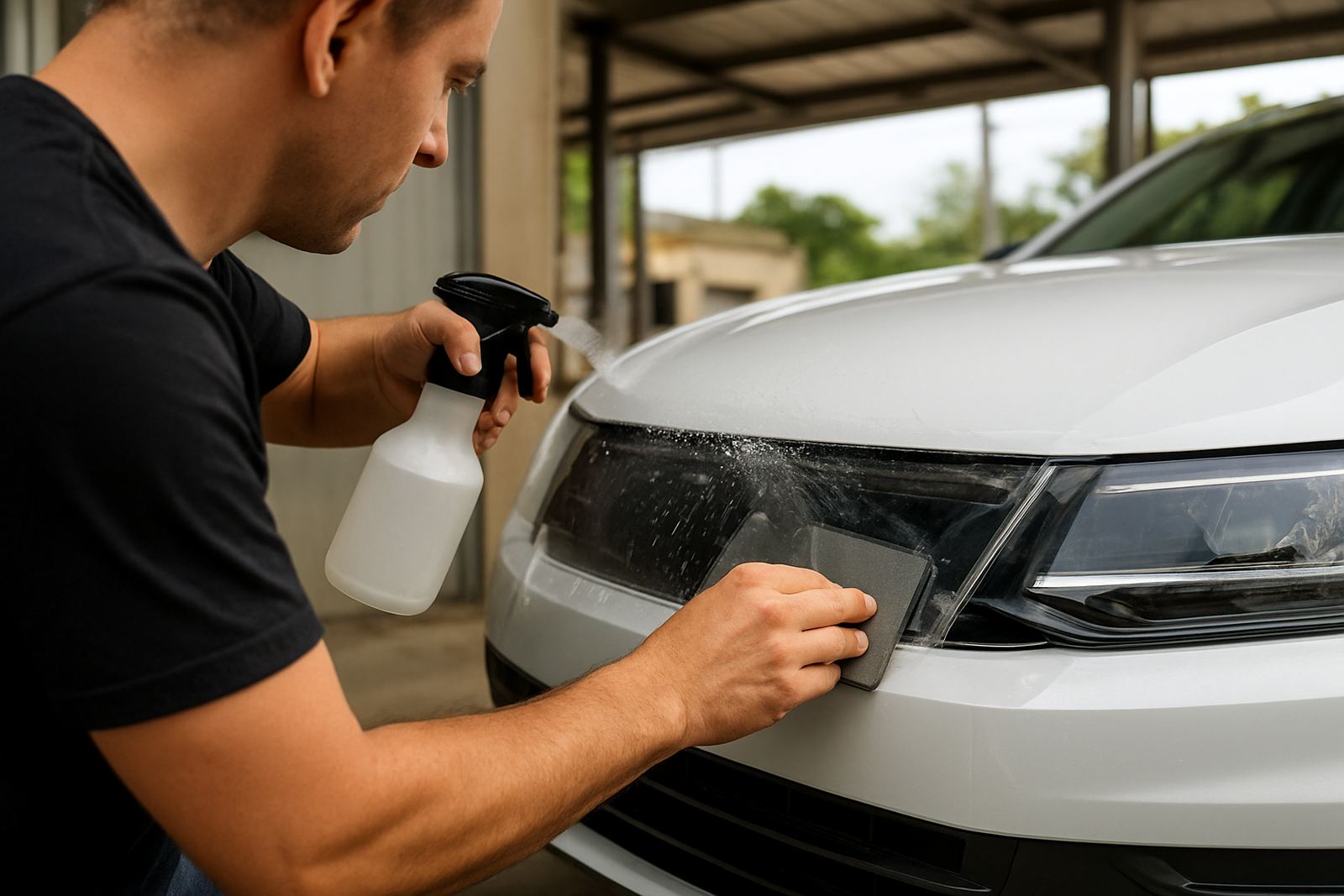
Fitment is done in a clean wrapping bay so the lens can be prepped properly and the film can be laid down without dust or lint showing through. The process starts with washing, degreasing and drying the headlight, followed by surface prep to remove polish residue, wax and road film. The film is then positioned, squeegeed and trimmed neatly around the lens. On shaped lights, the installer may use controlled heat to help the film form around curves and return edges. The job needs a stable power supply for lighting and small tools, plus clean water for prep and washing. No gas is normally required for standard headlight film installation.
Most fitments can be completed while the vehicle is parked in our bay or on-site where conditions allow. For fleet work, we often schedule units in batches so the vehicle can return to service without long downtime. In some cases the bumper edge or grille placement affects access, so we check the vehicle before booking time. If a headlight unit is cracked, badly sanded or already lifting, that should be flagged first as it can affect the finish. A clean install depends more on prep than speed, so rushing here is a mistake.
- Clean bay, dust control and good lighting needed
- Surface prep includes wash, degrease and dry down
- Heat may be used to help the film settle on curves
- Standard fitment does not usually need gas equipment
Care, Cleaning and When to Revisit the Film
After fitment, the film should be left to settle before heavy washing. A light hand wash is best in the first few days, and high-pressure washing should be kept back from the edges. Once cured, the film can be cleaned with the same mild car wash soap used on paintwork, but avoid abrasive pads and harsh solvent cleaners. On vehicles that work in dusty areas, a soft microfibre cloth and regular wash routine will keep the lens clear without wearing the film early. If the vehicle is used in Cape humidity or on salty coastal roads, a rinse now and then helps keep grime from building up around the edges.
Service checks are useful if the vehicle does long runs, sits in full sun all day or comes into contact with heavy bug build-up and road grime. The film may last well for years, but edges, corners and damaged sections should be inspected during routine wash days. If the lens has been repolished or the bumper removed for other repairs, it is worth checking the film again. A quick touch-up now is often cheaper than replacing a damaged lens later. It also keeps the front of the vehicle looking neater, which matters on customer-facing fleets.
What to Check Before You Order
When ordering headlight protection film, send the vehicle make, model, year and, if possible, a clear photo of the front lights. Facelift and pre-facelift shapes can differ more than people expect, so the exact version matters. You should also say whether the headlights are already polished, pitted or repaired, because that changes the prep needed. If the vehicle has aftermarket lamps or modified front bodywork, mention that upfront so the cut pattern and coverage can be checked first.
For fleet managers, it helps to list how many vehicles need the film, where they are based and whether the work must be done in Kya Sand, at another Johannesburg area, or at one of the other service zones. Ask about lead times for cut and fit, edge finish, and whether replacement pieces can be supplied later if one lens gets damaged. If the vehicle is being fitted with other surface protection at the same time, that can usually be planned together. A proper order note saves back and forth and keeps the job moving.
- Vehicle make, model and exact year
- Photos of the headlights and front bumper
- Current condition of the lenses
- Whether it is a single vehicle or fleet batch
- Preferred fitment area and deadline
Key facts
| Film type | Clear polyurethane protective film |
|---|---|
| Coverage | Headlight lens protection with model-specific cutting |
| Finish | High clarity, low-visibility appearance |
| Typical fitment time | About 1 to 2 hours per vehicle, depending on shape |
| Suitable vehicles | Cars, SUVs, bakkies, vans and fleet units |
| Care level | Mild soap wash, soft cloth and regular edge checks |