
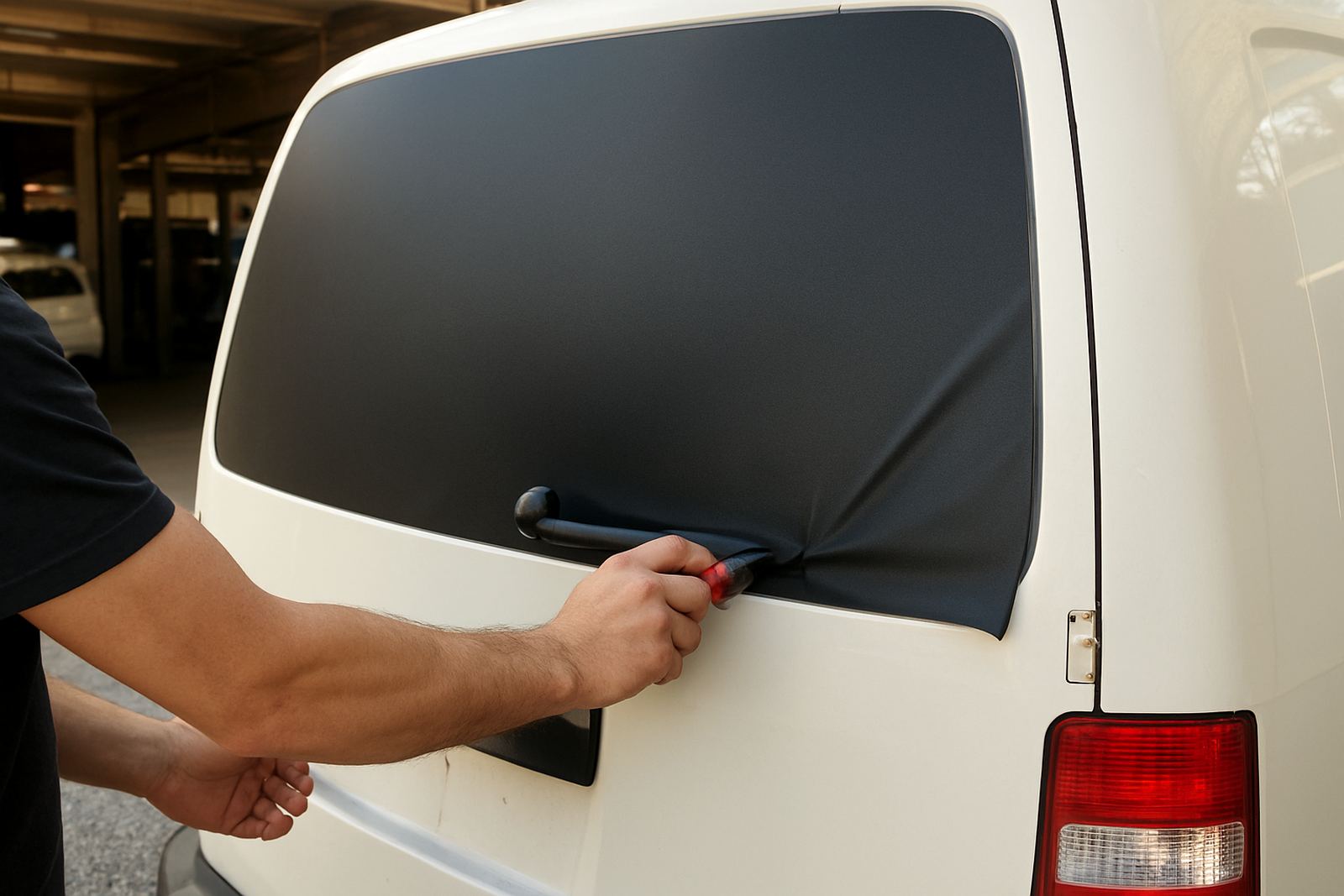
What a Rear Window Graphic Does on the Road
A rear window graphic is printed and fitted to the inside or outside of a rear window using a perforated vinyl or clear film, depending on the look and visibility required. It gives you a dedicated panel for business names, phone numbers, service areas, promos, operating hours or a simple brand message, while still keeping the vehicle usable every day.
For Johannesburg traffic, school runs, courier vehicles and service fleets, the rear window is valuable advertising space. It works especially well on hatchbacks, panel vans, crew buses and light commercial vehicles where the rear tailgate or barn doors face most of the traffic queue. Because the film is cut to the glass and not the paint, it can be changed later with less disruption than a full body wrap.
Used properly, it does more than advertise. It can also help reduce glare and heat slightly, and on some vehicles it gives a cleaner, more professional finish than stickers or temporary signage. If your routes include coastal humidity, dust roads or frequent washing, the right material choice matters for durability and clarity.
Sizes, Visibility Options and Material Choices
Rear window graphics are made to suit the exact shape and size of the glass, so there is no fixed one-size format. The artwork is normally measured to the visible glass area, with a small clearance around trims, heater lines and wiper sweep paths where needed. On most vans, the usable area ranges from about 900 x 500 mm to 1500 x 700 mm, while hatchbacks are often smaller and more curved.
Common options include one-way vision perforated film, solid cut lettering, partial coverage bands and full-window printed graphics with sight-through areas. Perforated film is the most common choice when you want the outside to show a full colour design and the inside to remain reasonably clear. Solid vinyl lettering suits names, numbers and simple messages where high legibility is the priority.
- Perforated print for full branding with forward visibility from inside
- Cut vinyl text for contact details and simple service messages
- Frosted or tinted style film for a cleaner, lighter look
- Partial coverage for fleets that need consistency across mixed vehicle types
The right choice depends on how much glass you want to cover, how often the vehicle is used, and whether passengers or tools must still be seen through the window.
Where Rear Window Graphics Work Best
This product suits businesses that spend a lot of time in traffic and want extra message space without adding clutter to the doors or bonnet. It is especially useful for trades, delivery vehicles, mobile services, schools, shuttle vehicles and small businesses that need one more place to show a number or service list.
Rear window graphics are also useful on vehicles that already carry a full side wrap but still need stronger rear visibility for following traffic. A tailgate graphic on a hatchback can carry the main message, while a van rear window can show the company name, website, emergency contact or fleet unit number. On municipal routes or areas with strict signage rules, the smaller footprint can be an easier option than larger exterior panels.
- Vans and panel vans with rear glass or glass inserts
- Hatchbacks used for sales, repairs or local deliveries
- Fleet vehicles that need uniform rear-facing branding
- Mobile technicians who need contact details visible at a red light
For coastal branches and vehicles parked outside all day, the material needs to cope with heat, humidity and regular cleaning. A properly chosen film and correct edge finishing help prevent early lifting and fading.
Installation, Power Needs and What Happens on the Day
Installation is done in a clean bay where the glass is washed, degreased and checked for chips, heating lines and old adhesive. The film is then positioned, squeegeed and trimmed to the window shape. On perforated films, the outer surface is the printed face while the inside backing is removed after fitting. If the vehicle has a rear wiper or defroster lines, the installer plans the cut and alignment carefully so the graphic sits neatly and the rear view remains practical.
Rear window graphic installation does not need mains power or gas. The only requirements are a clean fitting area, lighting, water for surface prep and suitable drying conditions. In hot weather the film can grab quickly, while in cooler or more humid weather it may need a bit more time to settle before final trimming and inspection. For fleet work, vehicles are usually booked in one by one or in batches to keep downtime under control.
If the vehicle has recently been painted or had glass replacement, it should be fully cured and clean before fitting. Fresh paint can still release solvents, and glass with residue from replacement work can affect bond strength.
Care, Cleaning and Service Life
Rear window graphics are low maintenance, but they do need the right cleaning method. Use a soft cloth, clean water and mild soap. Avoid harsh abrasives, blade scrapers, high-pressure water aimed directly at the edges, and strong solvents around the film corners. On rear windows with wipers, make sure the blade is in good condition because worn rubber can scratch the surface over time.
For good service life, leave the vehicle dry and do not roll or scrape the film while it is still settling after installation. Most graphics settle within a few days, but heat, sun exposure and washing habits all affect lifespan. In South African conditions, a well-made rear window graphic can last several years if it is cleaned properly and not exposed to repeated abuse. It’s also wise to check the edges after long trips or regular highway use, especially on vehicles that spend time at the coast or on dusty sites.
- Wash gently and avoid strong solvent cleaners
- Do not pick at lifted corners or use metal tools
- Check wiper action and replace worn blades
- Inspect after loading, towing or long-distance driving
If a graphic starts to fade, crack or lift at the corners, it can usually be replaced without changing the whole vehicle branding. That makes it a practical option for fleet updates and seasonal promotions.
What to Check Before You Order Rear Window One-Way Vision
Before ordering, confirm the vehicle make, model and year, because rear glass shapes vary even within the same badge line. Measure the visible glass area, note whether there is a rear wiper, heater lines, parking sensors near the tailgate and any existing tint or film already on the window. If the vehicle already has a dark privacy tint, artwork colours need enough contrast to stay readable from a distance.
Also check the message you want to carry. A rear window gives limited space, so the wording must be tight and useful. Long paragraphs do not work well. Keep the main contact number clear, then add only the services or area that matter most. For fleet applications, confirm the unit number format, company naming style and any colour rules that must match the rest of the vehicles.
- Vehicle model, year and rear glass measurements
- Presence of wiper, demister lines and existing tint
- Artwork wording, contact number and service area
- Whether the graphic must be removable later
Good artwork planning saves time at fitting and avoids reprints. If you want the rear window to match other fleet markings, keep the fonts, sizes and logo placement consistent across all vehicles.
Key facts
| Product type | Rear-facing vehicle window branding for vans and hatchbacks |
|---|---|
| Material options | Perforated print, cut vinyl lettering, frosted style film |
| Typical size range | About 900 x 500 mm to 1500 x 700 mm, vehicle dependent |
| Installation method | Clean glass prep, wet or dry apply, trimmed to window shape |
| Power or gas needed | None |
| Suitable vehicles | Panel vans, hatchbacks, light commercial vehicles and fleet cars |