
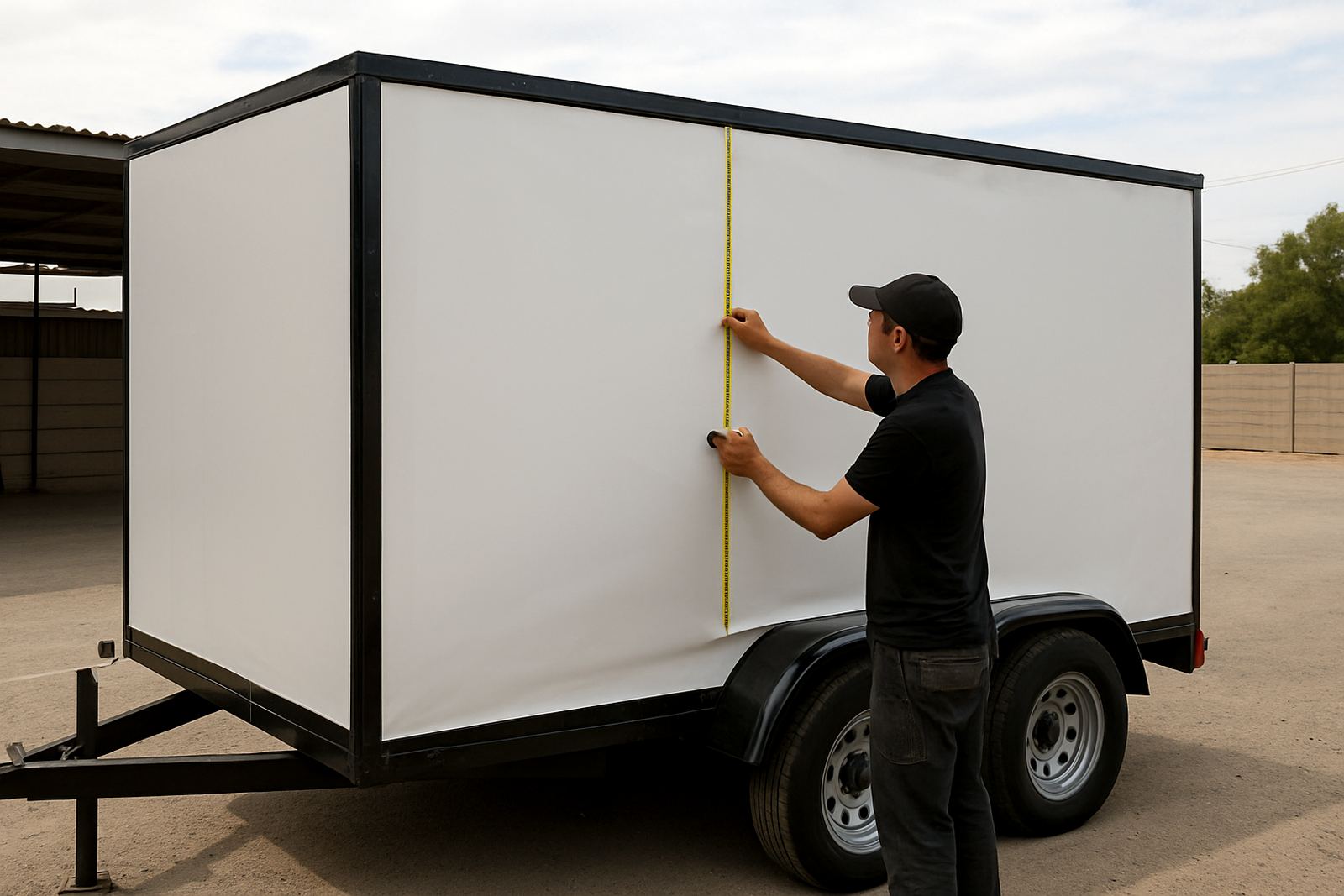
What a trailer wrap does on the road
A trailer wrap is a printed vinyl graphic or full coverage finish applied to the outer panels of a box trailer, flatbed side panel, fridge trailer, motorcycle trailer, catering trailer or branded tow unit. It gives you space for logos, contact details, service lists and product images while also protecting the panel surface from light scuffing and daily washing. For many businesses, a trailer is the best advertising surface they own because it sits in traffic, at loading bays and on customer sites without extra effort.
We handle trailer wraps for one unit or a mixed fleet, with artwork set up to suit your route, your towing vehicle and the way the trailer is used. On commercial trailers, we can keep things simple with reflective lettering and panel logos, or go full coverage where the side faces carry strong brand blocks and clear callouts. For private use, a colour change or clean branded finish can make an older trailer look sharp again.
- Full wrap, partial wrap or cut vinyl graphics
- Gloss, satin or matte finish options
- Reflective detail for night visibility where required
- Suitable for steel, aluminium and composite trailer skins
Trailer sizes, panel types and finish options
Trailer wrap work starts with the actual trailer shape, because not every unit has the same side height, wheel arch position or rear access. We work on compact box trailers, 1.2 m and 1.8 m side panels, long commercial drawbar units, equipment trailers and tow-behind display trailers. Where a trailer has rivets, ribs, vents or access doors, we plan the graphics around those features so the finished result still reads properly from 10 to 30 metres away.
For smooth panels, a full printed wrap usually gives the neatest finish. For textured or ribbed panels, we may recommend a mixed approach using printed sections, solid colour film and lettering so the finish stays tight and serviceable. We also support brand standard work for companies that need every trailer to match the same colours and layout across Johannesburg, Pretoria, Durban and the East Rand.
- Typical trailer panel heights: Common trailer panel heights we work with include 900 mm, 1200 mm, 1500 mm and 1800 mm.
- Length coverage from 2.4 m up to 7.5 m or more
- Rear doors, barn doors, side hatches and wheel arches can be wrapped
- Optional laminate for extra UV and abrasion resistance
Where trailer wraps work best
Trailer wraps suit businesses that need repeated exposure in public places. That includes builders, logistics operators, events crews, food vendors, hire companies, fitment teams, municipal contractors and sales teams that move stock or displays from site to site. If your trailer spends time at estates, industrial parks, retail centres or roadblocks, the wrap does steady work every day.
In Johannesburg and Pretoria, road dust and frequent washing mean surface prep matters. In Durban and other coastal areas, humidity and salt air call for correct installation, edge finishing and good maintenance. We plan around that from the start and it helps the wrap hold better over time. A trailer that works hard should still look clean, not tired after a few months.
- Best for fleets that need repeated brand exposure
- Good for route-based advertising and site-to-site visibility
- Useful for temporary campaigns and seasonal promotions
- Can match a towing vehicle, bakkie or truck body for one clean brand set
Installation, timing and site requirements
Most trailer wrap work is done at our Kya Sand base or at an agreed fleet bay, depending on the size of the unit and how many trailers are on the job. Smaller trailers can often be completed in a day once the artwork is approved and the surfaces are ready. Larger fleet projects, or trailers with complex panel repairs, may need a longer turnaround. If a trailer has been freshly painted, we normally need the paint to cure properly before application.
We use clean, dry work conditions and controlled heat during installation. That means no power heavy setup is needed from the client side beyond normal access. For remote fleet work, we can discuss site conditions, parking space and whether the trailer can be left open for curing and edge finishing. Gas is not required for trailer wrap installation, though stable power helps with lighting and finishing tools. In load-shedding periods, we plan the install sequence so the job stays on track and does not waste your time.
- Allow space to open doors, ramps or tailgates fully
- Trailer should be washed and free of wax, tar and loose sealant
- Any rust, dents or lifted sealant should be flagged before booking
- Fresh paint normally needs curing time before wrapping
Care, washing and servicing after fitment
Trailer wraps last best when they are washed by hand or with a soft pressure wash at a sensible distance. Harsh scrubbing, strong solvent cleaners and dirty brushes can mark the film or lift edges over time. If the trailer carries cement dust, road grime or food residue, it should be cleaned sooner rather than later because build-up can stain around seams and rivets.
Aftercare is simple, but it does need discipline. Check the corners, lower panels and rear doors every few weeks, especially if the trailer is used on gravel roads or near construction sites. If you see a lifted edge, puncture or scrape, deal with it early. Small repairs are cheaper than waiting until a panel needs replacement. We also offer removal work when the trailer is being sold, rebranded or sent for refinishing.
- Wash with mild soap and soft cloths or mitts
- Keep high pressure nozzles off the edges and joins
- Avoid hot exhaust fumes and long sun baking where possible
- Book inspection after scrapes, panel repairs or repainting
What to confirm before you order a trailer wrap
Before we quote, it helps to know the trailer size, panel material, current condition and how the unit is used. We also need the exact branding items you want on the wrap, such as logo files, contact numbers, service areas and any legal wording needed for goods, transport or safety marking. If the trailer will be used across provinces, it is worth planning a layout that reads well at speed and from both sides.
Good trailer wrap planning avoids delays. A clean, accurate brief lets us set the right print scale, place joins away from handles where possible, and choose the right film for the finish you want. If you are combining a trailer wrap with a towing vehicle, wheel refurbishment or tinting, we can keep the colours aligned so the whole set looks like one unit. That saves time and gives you a more consistent fleet image.
- Measure side panels, rear doors and any front nose section
- Note rivets, curves, vents and existing damage
- Provide vector logos or high resolution artwork where available
- Confirm whether you want full coverage or a partial branded finish
Key facts
| Product type | Trailer wrap for box trailers, tow units and commercial trailers |
|---|---|
| Material options | Printed vinyl, solid colour vinyl, reflective detail, protective laminate |
| Common sizes | From compact 2.4 m trailers to long fleet trailers over 7.5 m |
| Finish options | Gloss, satin and matte |
| Installation | Workshop fitment in Kya Sand or fleet bay installation nationwide |
| Typical turnaround | 1 to 3 working days depending on size, prep and artwork approval |