Why sales cars need to carry more than a logo
Sales vehicles spend most of their time in front of clients, on company premises and parked where people can see every detail. That means scratches on door edges, stone chips on highways, faded decals and mismatched tint can all chip away at the impression your team makes before the meeting even starts.
For sales teams, the goal is usually not a full motorsport-style change. It is a clean, measured look that ties the car to the business, gives the driver a polished appearance and keeps the vehicle easy to resell later. In Johannesburg, Pretoria, Sandton, Midrand and the East Rand, this matters even more because sales cars cover long distances and get parked in open sun for hours.
- Ideal for reps, account managers, technical sales staff and regional managers
- Works well on sedans, hatchbacks, SUVs and light commercial vehicles
- Can combine branding with protection on high-wear areas
What a typical sales car package includes
A typical package starts with the vehicle condition. We look at paint health, existing stickers, stone chips, panel repairs and whether the car spends time at coastal branches where humidity can affect edges and fittings. From there, the right mix of services can be planned around the vehicle's daily use.
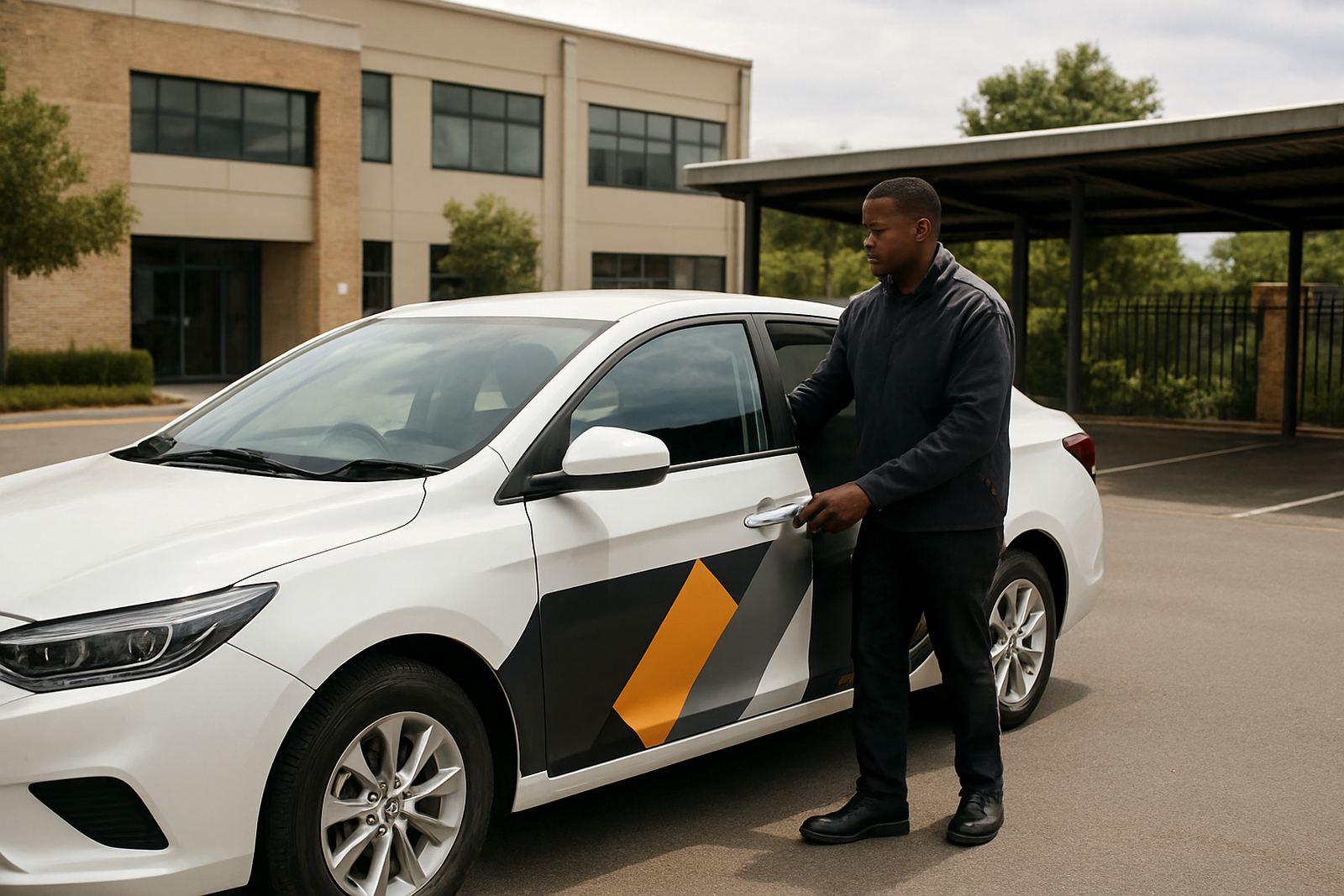
For a sales car, a common setup is a partial colour change or branded wrap on the doors and rear quarter panels, plus printed branding on the bonnet or tailgate. Add window tinting for comfort and privacy, and paint-protection film on the front bumper, mirrors, door cups and other contact points. If the car is a high-mileage rep vehicle, wheel refurbishment can also tidy up curb marks from tight parking in city centres and office basements.
- Surface preparation and cleaning before any film is fitted
- Vinyl installation for branding or full colour changes
- PPF on front-facing and high-touch areas
- Window tinting for heat control and glare reduction
- Interior restyling for trim pieces, consoles and door inserts
- Wheel refurbishment for a cleaner finish between replacements
Layout choices that keep sales cars looking professional
The best sales car layouts are easy to read from a few metres away and still look tidy up close. A small logo on the door may work for local appointments, but teams that move through larger estates, industrial parks or shopping centre parking areas often need stronger side identification so the vehicle is recognisable without shouting.
We usually advise placing the main brand mark on the front doors, the company name on the rear quarter or tailgate and contact details where they can be seen when the car is parked. For more formal sales teams, muted colours often work better than bright blocks because the vehicle needs to fit both a boardroom collection and a factory yard visit. If the team uses multiple branches, the same layout should be repeated on every car so the fleet stays consistent.
- Keep critical details on the sides and rear for passing traffic
- Use readable lettering sizes, especially on white or silver vehicles
- Match tint levels across the fleet so cars do not look pieced together
- Choose finishes that can handle frequent washing and daily use
Common mistakes that cost sales teams time and money
The biggest mistake is fitting a wrap before the vehicle is properly cleaned and inspected. Dust, old adhesive and damaged paint all shorten the life of the film. Another common issue is overloading the design with too much text. Sales staff need a car that looks professional from the first glance, not one that looks like a flyer stuck to every panel.
There is also the problem of poor planning around the sales cycle. If a vehicle is due for disposal or replacement in 12 to 18 months, spending heavily on full coverage may not make sense. In that case, a partial wrap or strong decal package may be the better choice. For cars that work across Gauteng all week and then head to Durban or other humid regions, aftercare matters too. Simple washing with the right products and no harsh scrubbing will keep edges down and the finish neater for longer.
- Applying film over chipped or poorly repaired paint
- Using fonts that are too small to read at a distance
- Mixing different tint shades across a fleet
- Ignoring parking damage on wheels and lower bumpers
- Skipping aftercare instructions during the first few days
Budget ranges for sales car wrapping in Rand
Budgets depend on the vehicle size, the number of panels covered, whether artwork needs to be created from scratch and whether the car needs tint, PPF or wheel work at the same time. A simple branded decal set for a sales car can start from about R8 500 to R15 000. A partial colour change or more detailed branded wrap usually sits between R16 000 and R32 000.
When the brief includes full coverage, paint protection on key areas, window tinting and some interior trim work, the budget can move into the R35 000 to R60 000 range depending on vehicle size and condition. Fleet work often brings better value per unit, especially when several cars are booked together and the layout is standardised across the team. That makes it easier for Ayanda and the production team to keep colours, placement and finish consistent from one branch to the next.
For sales managers comparing options, the main question is often not just price but lifespan. A cleaner specification on a vehicle that does 40 000 km a year can save money later by reducing repainting, resale touch-ups and time off the road.
How we plan a sales vehicle from first brief to handover
The process starts with the vehicle list, the branch locations and the role each car plays. A field sales car may need more protection on the nose, while a client-facing manager's vehicle may need a cleaner, lighter branding approach. Once that is clear, the artwork and installation plan can be matched to the cars, the routes they travel and the dates they can be off the road.
At our Kya Sand base and wrap bays in other service areas, we can work around business schedules so sales teams are not left short. If a car is used daily, the handover can be timed overnight or between meetings where needed. The final check includes finish quality, edge lines, panel matching and care instructions so the team knows what to expect in the first few days after fitting.
For sales fleets that need to look the part at every meeting, the right wrap plan is simple: keep it clear, consistent and easy to maintain.