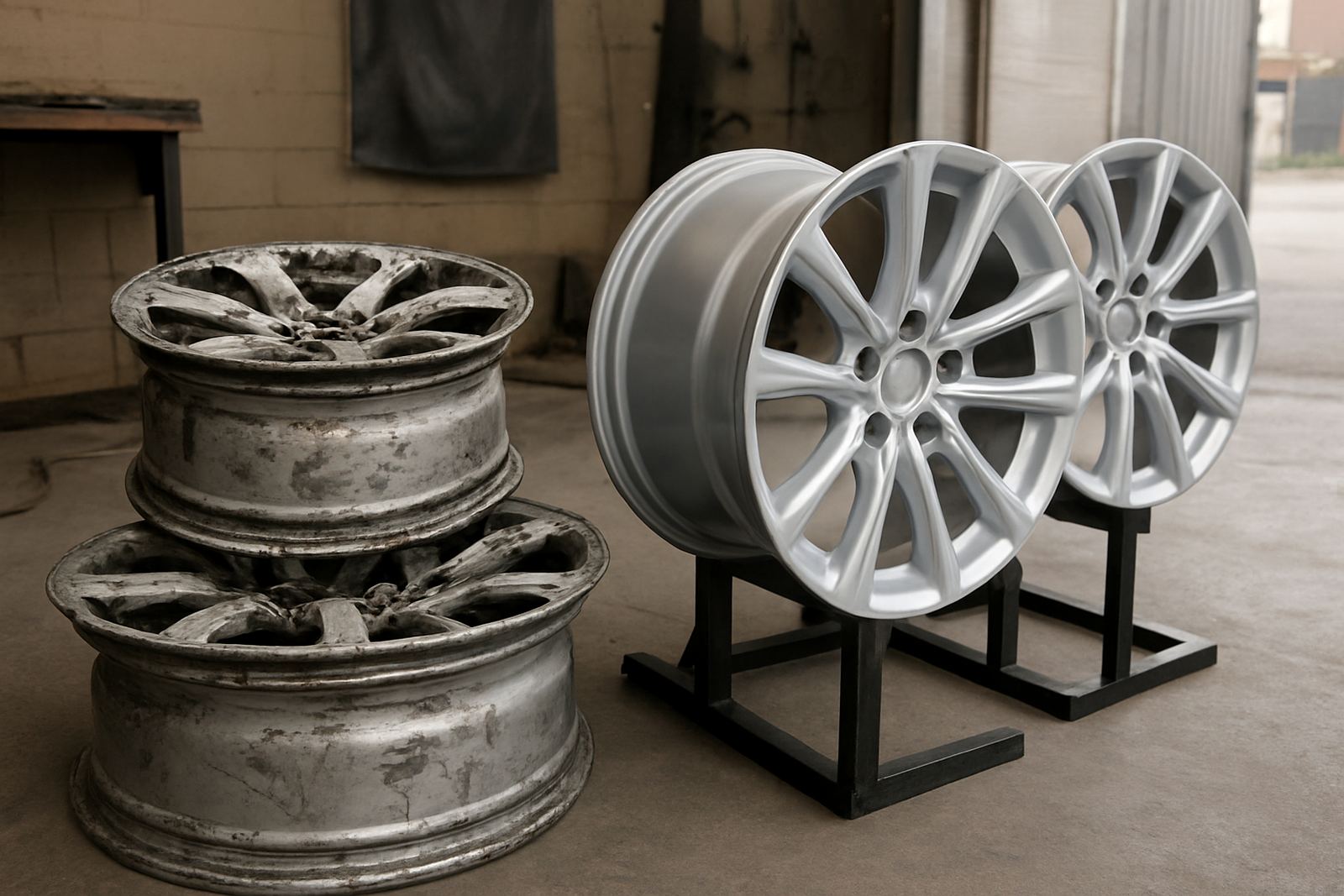
When wheel refurbishment is worth the spend
Not every scuffed wheel needs a full overhaul, but there are clear signs that refurbishment is the better call. If the finish is peeling, the rim has light corrosion, or the spokes have marks from parking bays and kerbs, a proper refurb can tidy the vehicle up quickly. For company cars and fleet vehicles, clean wheels also help keep the whole vehicle looking cared for between services.
In Johannesburg, daily traffic, roadworks and tight loading zones in places like Kya Sand, Sandton and the East Rand can leave wheels marked sooner than many owners expect. At the coast, humidity and salt in the air can accelerate oxidation on older finishes. If you are already doing a vinyl colour change, interior restyle or full debranding, wheel refurbishment is often the final step that makes the vehicle look properly finished.
- Light curb rash and scrape marks
- Clear coat lifting or peeling
- Corrosion around the lip or spokes
- Faded or mismatched wheel colour
- Brake dust staining that no longer washes off cleanly
What a proper refurbishment should include
A proper wheel refurbishment is more than a quick spray-over. The wheel should be removed, cleaned thoroughly and inspected for damage before any coating goes on. That allows the technician to deal with bent rims, deep gouges or previous poor repairs before the finish is applied. On alloy wheels, surface prep matters a lot because any old wax, tar or brake dust left behind can affect adhesion.
For most road-going vehicles, the process usually includes stripping the old finish if needed, repairing small defects, preparing the surface, applying colour and then sealing it for day-to-day use. If the vehicle is used on rougher routes, carries site teams, or does long freeway mileage, ask for a finish suited to that use. A wheel on a courier bakkie in Midrand will see different conditions to a family SUV parked in a basement in Bryanston.
- Removal and inspection
- Cleaning and decontamination
- Repair of minor damage where possible
- Surface preparation and masking
- Colour application and protective coating
- Final curing and fitment check
Signs the wheel needs more than cosmetics
Refurbishment is for appearance and surface protection, but some damage should be assessed before you commit. If the wheel is cracked, badly bent, or losing air, it needs a structural check first. The same applies if the wheel has already been repaired more than once and the metal looks thin or distorted. A cosmetic finish cannot make an unsafe wheel roadworthy.
Watch for vibration at speed, uneven tyre wear, or a steering wheel that pulls after a pothole impact. Those signs point to alignment or structural issues, not just a surface problem. On fleet vehicles, it is worth checking all four wheels during tyre rotation, especially if vehicles do site visits in industrial areas where potholes and kerb strikes are common. Better to catch it early than fit a fresh finish onto a wheel that still needs mechanical attention.
- Cracks visible on the inside or outer edge
- Air loss from the valve area or bead seat
- Wheel wobble or steering vibration
- Deep bends from pothole impact
- Repeated damage in the same section
How wheel refurbishment fits into a full vehicle refresh
Wheels are one of the first things people notice, so they matter when you are refreshing a vehicle for resale, rebranding or daily business use. A fresh wheel finish pairs well with vinyl colour changes, paint protection film and window tinting because the vehicle reads as one complete job rather than a collection of separate fixes. For fleet branding, matching the wheel colour to the vehicle finish can also keep the look tidy and consistent.
Many owners choose to refurbish wheels at the same time as wrap removal or interior restyling. That saves repeated downtime and means the vehicle only visits the workshop once. In practical terms, this is useful for businesses in Gauteng that cannot spare a vehicle for long. If the vehicle is already booked for artwork, surface prep and wrap installation, add the wheel work before the handover so everything leaves at the same time.
A good refresh plan should consider the vehicle from all sides, not only the panels. If the paint is protected, the tint is in order and the wheels match the new look, the vehicle presents better in the office car park, on site and at client visits.
What to ask before you book your wheels in
Before approving the work, ask what finish is being used, how long curing takes and what care is needed afterwards. Different vehicles need different handling. A courier van that covers heavy mileage will need a tougher maintenance routine than a weekend SUV. If the wheels are complex in shape or have a two-tone finish, confirm whether the price covers all faces, inner barrels and valve area.
It also helps to discuss turnaround time, especially if the vehicle is part of a fleet. In Johannesburg traffic, even a half-day delay can disrupt deliveries and site calls. Ask whether the wheels are removed for the job and whether torque settings will be checked on refit. That small step matters more than people think, and it helps avoid problems later.
- Is the wheel sound structurally?
- Will the full wheel, including inner areas, be coated?
- What is the expected curing time?
- What care products should be avoided for the first few days?
- Will the refit include a final torque check?
Aftercare that keeps the finish looking good
Once the refurbishment is done, the finish will last better if the wheels are washed regularly with mild shampoo and a soft brush. Avoid harsh wheel acids unless the finish specifically allows it. On coastal routes, rinsing salt and grime off more often helps stop premature dulling. In Johannesburg, dust and brake residue build up quickly, especially on white or silver finishes, so a weekly wash is usually enough for private vehicles and even more important for fleets.
For the first few days, avoid heavy scrubbing, machine polishing or aggressive cleaning chemicals. If you hit a pothole, kerb or speed bump hard, inspect the wheel again. Small chips are easier to deal with early than after moisture gets under the coating. Good aftercare does not take much time, but it does protect the money you have already spent.
For vehicles used as moving adverts, clean wheels can make the whole wrap or branding work harder. A tidy finish helps the vehicle look current, well run and ready for the road.