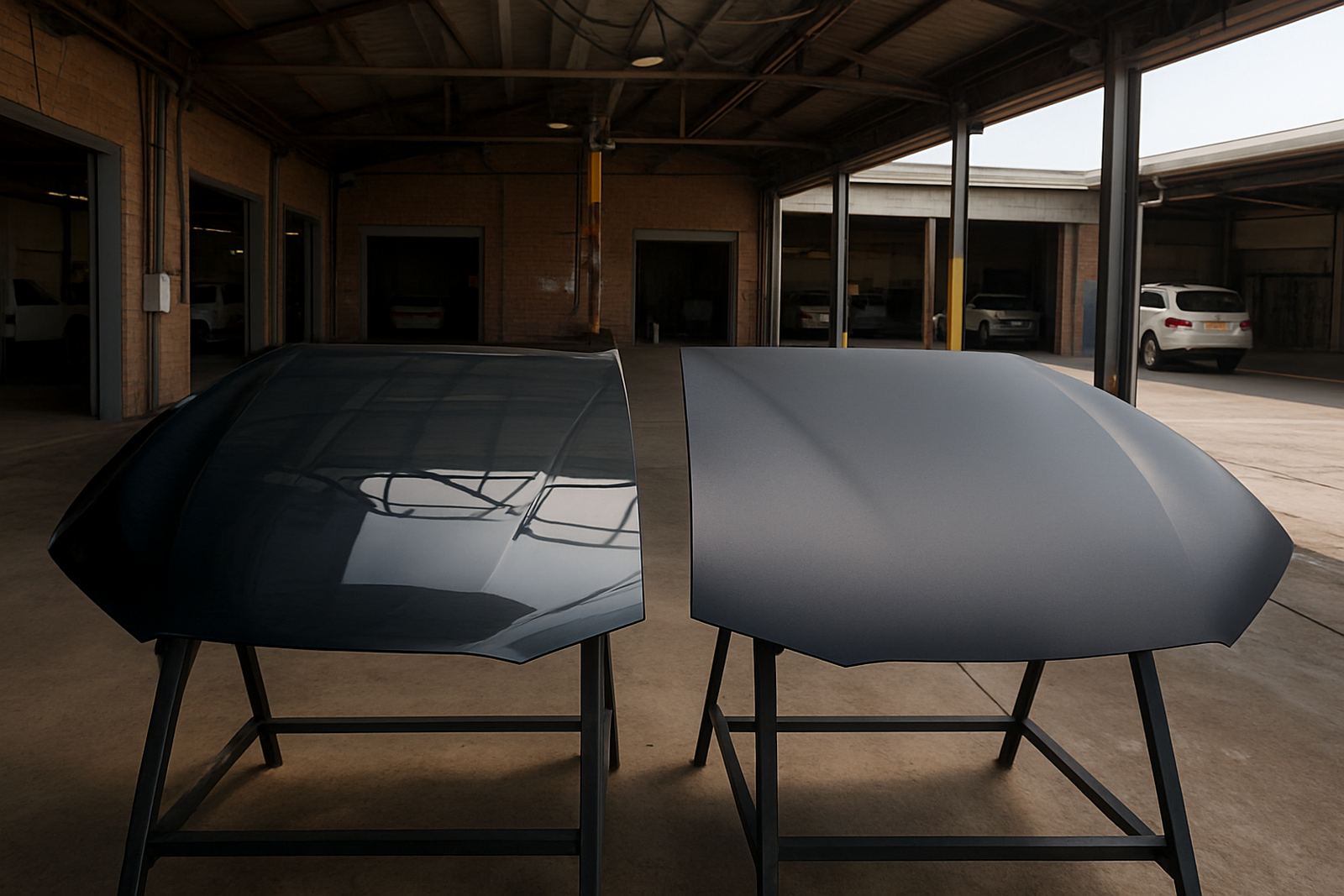
Why the same colour can feel like three different vehicles
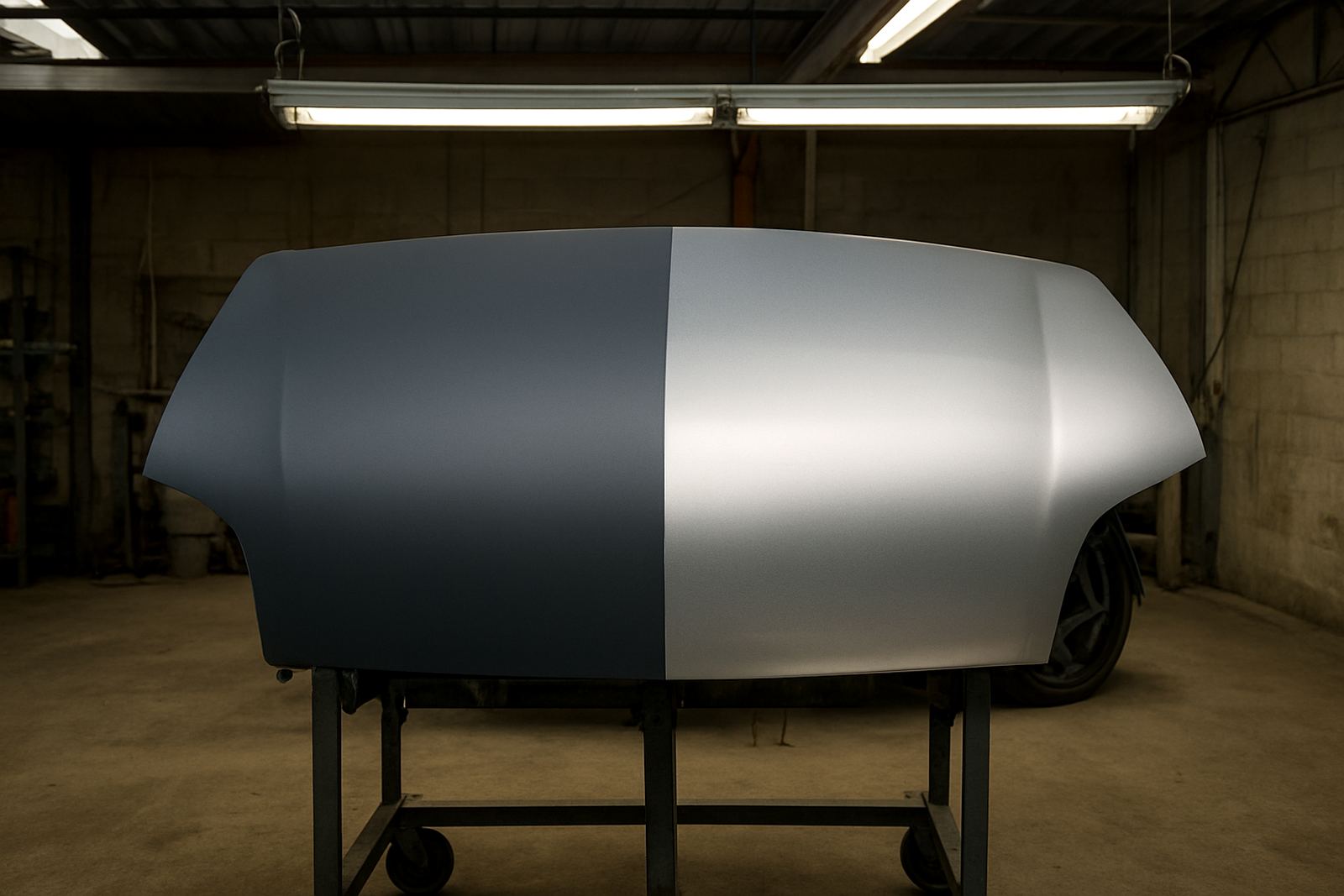
A silver bakkie in gloss can look crisp and formal. The same silver in satin feels calmer and more modern, while matte softens the reflections and makes the body lines look flatter. That is why finish matters as much as colour choice. On fleet vehicles, the finish can change how the brand is read from the road, and on private vehicles it can affect how often the car needs a wash.
Choosing the right finish usually starts with the way the vehicle is used day to day. A courier van doing Sandton runs, an executive SUV parked at a home in Bryanston, and a sales car covering the East Rand all face different conditions. Sun, traffic dust, gravel spray and roadside parking in Johannesburg all leave marks in different ways, so the finish should match the job, not just the look.
One thing people often miss is that body shape changes the result. A sharp panel line on a panel van can look stronger in gloss, but a rounded hatch may suit satin better because it hides minor waviness in the body. That is not a fault of the film, just how light works on curved surfaces.
Gloss finish for high visibility and easy cleaning
Gloss is the closest wrap finish to a sprayed paint appearance. It reflects more light, shows stronger colour depth and works well when you want a clean corporate look. For sales vehicles, service cars and premium personal vehicles, gloss often gives the most familiar result.
It is also the easiest of the three finishes to live with in daily use. Dust wipes off more quickly, and wash marks are less noticeable from a distance. That matters in Gauteng where a vehicle can leave Kya Sand clean in the morning and come back with a fine layer of road dust by lunchtime.
- Best for bright brand colours that must stand out on the road
- Good for fleets that get washed often
- Useful when you want the vehicle to still look like painted metal
- Less forgiving of swirl marks if the wrong cloth or sponge is used
Gloss is not always the best choice for every panel, though. On a vehicle with older paint underneath, the reflective surface can show more surface prep work if the substrate was not sorted properly first. That is why prep and installation matter as much as the finish itself.
Satin finish for a modern middle ground
Satin sits between gloss and matte. It has a soft reflection, enough to give shape and depth, but not so much that every highlight jumps out. For many South African businesses, this is the most practical choice because it looks smart without being too shiny or too flat.
Satin often suits delivery fleets, company SUVs and trades vehicles that need a presentable look with lower visual fuss. It also works well on darker colours such as charcoal, navy and deep green, where gloss can sometimes look too formal and matte can look too muted. On a cloudy Durban morning or under a harsh Pretoria sun, satin keeps a steady appearance.
There is a small trade-off. Satin can show strong finger marks and cleaning streaks if it is wiped when hot. It needs a little more care than gloss, but it usually hides day to day dust better than a polished finish. For many owners, that balance makes it a practical middle path.
- Balanced choice for mixed business and personal use
- Helps soften harsh reflections on larger panels
- Looks professional without feeling too flashy
- Needs correct cleaning products and gentle washing
Matte finish for a calm, technical look
Matte absorbs more light than it reflects, so the vehicle reads as quiet and deliberate. That can be powerful when the brand wants a disciplined, no-nonsense image. Matte also works well on sportier vehicles where the body shape does the talking instead of shine.
But matte is the least forgiving finish. Road grime, tar spots and oily hand marks can show faster, especially on vehicles that spend time in construction zones, industrial areas or coastal routes. A fleet that runs between Johannesburg and the coast will also deal with more humidity, salt air and contamination, so the aftercare plan should be set before the wrap goes on.
Matte is best when the owner understands the cleaning routine and is happy to keep to it. It is not difficult to maintain, just different. You avoid abrasive polishes and harsh waxes, and you use the right wash process so the finish does not become patchy over time.
How local conditions in Gauteng and the coast change the choice
South African conditions do influence the finish decision. In Johannesburg, dust and load shedding can mean more night parking and more exposure to parking bay grime. In Midrand and on the N1 corridor, heavy traffic can leave a film of soot and brake dust on the vehicle pretty quickly. In Durban, humidity and sea air add another layer of care for both film and finish.
For fleet managers, the practical question is not only what looks good on day one, but what still looks respectable after six months of work. A finish that hides minor dust can save cleaning time. A finish that is easy to rinse can save labour. A finish that makes a vehicle read clearly from 20 or 30 metres can help the brand more than a fancy effect that disappears in traffic.
If the vehicle is parked outdoors most of the day, the safer choice is usually the one the team can maintain properly. A finish that is hard to clean but never gets cleaned will always look worse than a simpler option that is cared for well. That applies to one car or a 40 vehicle fleet.
Choosing by use case, not by trend
Finish should match the job. A company with a strong brand standard may want gloss across the fleet so every vehicle looks consistent. A creative business may choose satin to keep the image current without being loud. Matte can suit a personal vehicle, a premium shuttle, or a project where understatement matters.
Before choosing, ask three practical questions: how often will the vehicle be washed, where will it be parked, and how long must the finish stay presentable between services? Once those are clear, the answer usually becomes simpler. We see this often with fleet projects in Sandton and Pretoria where the vehicles must still look neat after long days, tight schedules and all the usual parking lot knocks.
- Choose gloss if brand brightness and easy washing matter most
- Choose satin if you want a calm, businesslike appearance
- Choose matte if the vehicle is kept clean and carefully maintained
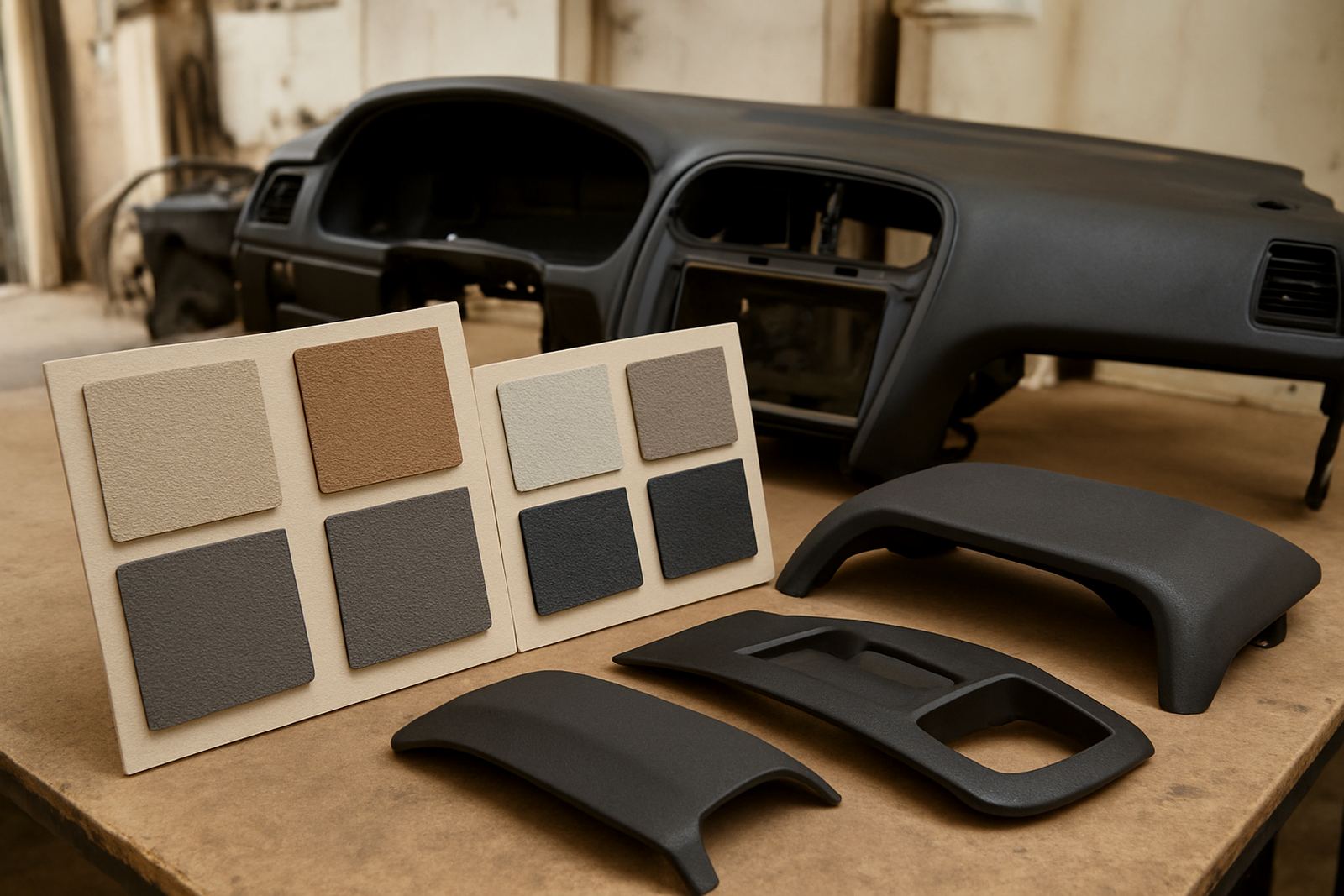
- Check how the finish will look on the exact body shape, not just on a sample swatch
What to confirm before sign-off
Before any wrap goes ahead, confirm the finish under good light and ask how it will be maintained. Sample pieces can look different in the studio than they do outside at noon, and the difference is worth checking. Ask how the finish handles washing, fuel splash near the filler area, and edge wear around handles and panel gaps.
It is also sensible to discuss removal down the line. Some finishes age better in high heat and some keep their look longer if the vehicle is stored indoors. If a fleet turns over every few years, the finish choice should support that plan instead of fighting it. A good wrap is not just about day one, it is about how it comes through the months after.
In practice, the right finish is the one that suits the vehicle, the route and the people looking after it. That is where the real value sits, not in the word on the quote sheet but in how the vehicle still looks six months later.