Where interior vinyl works best in a vehicle
Most people think of exterior colour changes first, but the cabin often shows wear earlier. Sun, hands, keys, coffee spills and constant climbing in and out all leave marks on dashboard trims, console surrounds, door inserts and gear selector panels. A well planned interior wrap can cover tired plastic, mismatched trim or scuffed factory finishes and give the cabin a cleaner look.
In South African conditions, this matters. Vehicles parked in open yards in Kya Sand or used all day between Midrand and Sandton see heat build-up, dust and glare. Interior vinyl is useful on:
- Dashboard centre strips and upper trim pieces
- Console surrounds and cup holder frames
- Door trims and armrest inserts
- Centre tunnel pieces and shifter surrounds
- Steering wheel spokes and detail trims where suitable
- Small decorative panels in commercial vans and executive cars
Not every surface should be wrapped, and that is where proper inspection helps. Soft-touch plastics, textured panels and heavily curved pieces each need different preparation and film choice. Some parts are better replaced, while others can be refurbished and wrapped for a neat finish.
Finish choices that work in local fleets and private cars
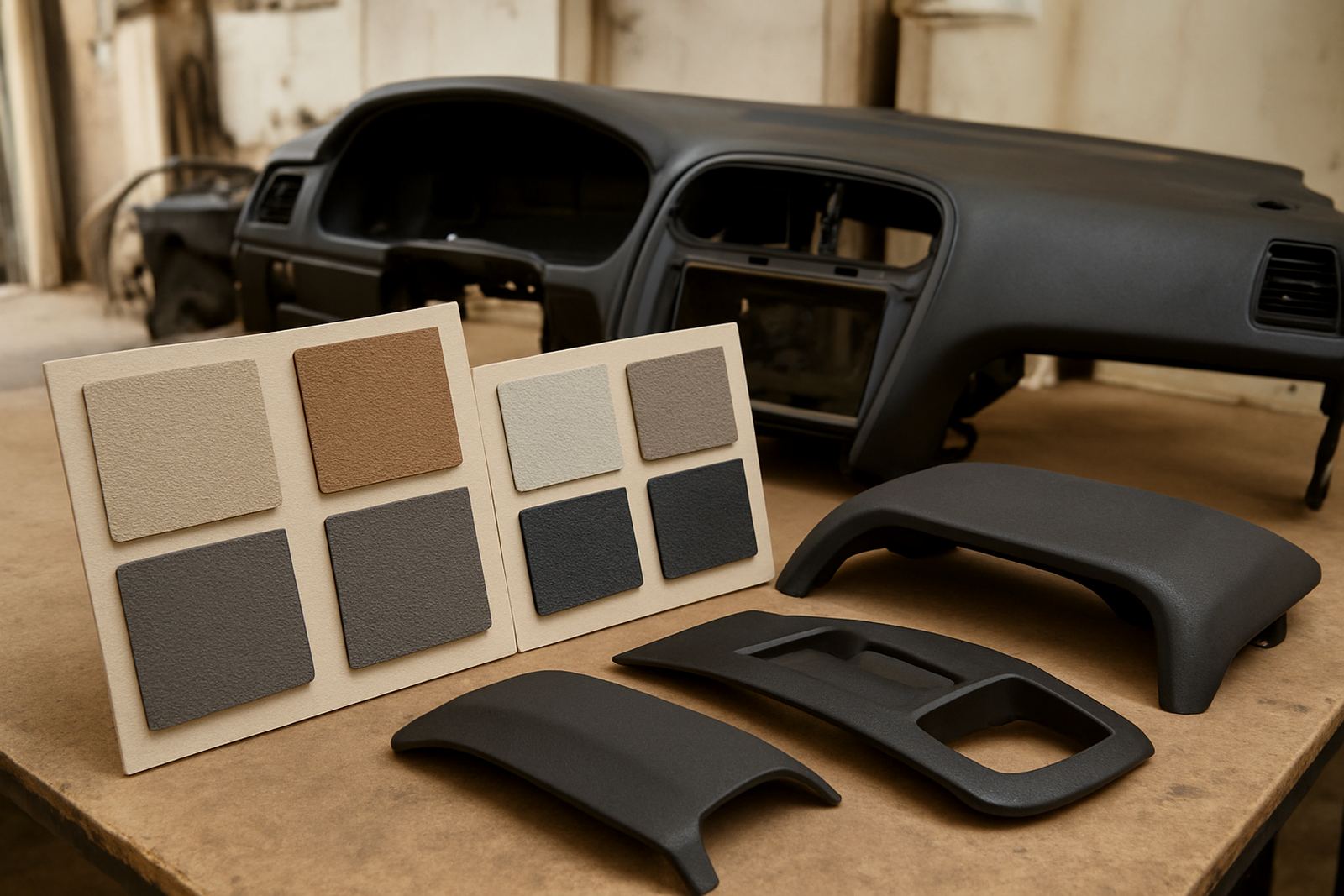
Interior vinyl comes in a range of finishes, but the best option depends on how the vehicle is used. A sales car that carries clients in Sandton may need a more refined satin or brushed look, while a courier or service fleet often benefits from darker matte finishes that hide dust and fingerprints. The aim is not only style but practical wear resistance.
Common finish choices include:
- Matte black for a clean, low-glare cabin
- Brushed metallic looks for executive vehicles
- Gloss accents for small detail panels
- Textured carbon-look films for sportier interiors
- Satin greys and charcoal tones for a factory-style result
Colour choice should work with the vehicle’s original cabin, not fight it. A strong contrast can look sharp on a show car, but on a working vehicle it may date quickly. Neutral colours also hold up better when the vehicle is resold. If you are managing a fleet, consistency is often more important than novelty.
What the fitment process involves
Good interior wrapping starts long before film touches a panel. Every piece needs to be removed or isolated properly, cleaned and degreased, then prepared so the adhesive bonds evenly. Dust and silicone are common problems inside vehicles, especially after polish products or repeated cleaning. If the prep is rushed, edges can lift and the finish will not last.
A proper process usually includes:
- Careful removal of trims where access is needed
- Surface cleaning and adhesion checks
- Template cutting or panel measuring
- Heat forming around curves and corners
- Edge finishing for a neat factory-style line
- Reassembly and final inspection
Fitment time depends on the number of panels and the complexity of the cabin. A simple trim refresh may take a few hours, while a full interior package on a premium vehicle can take longer. For fleet operators, it helps to schedule work in batches so vehicles are off the road for the shortest practical time.
When interior wraps are better than replacement
Replacing interior trims can be expensive, especially on imported vehicles or older models where parts are scarce. Wrapping is often the better choice when the underlying piece is sound but visually tired. It is also useful when you want a uniform finish across several vehicles, or when factory trims are mixed due to previous repairs.
Interior wrapping makes sense when you need to:
- Refresh faded or scratched trim without high parts costs
- Create a consistent look across company vehicles
- Cover discoloured plastic after sun damage
- Match new branding colours inside a service vehicle
- Improve presentation before resale or lease return
There are limits though. If a panel is cracked, warped from heat or loose at the clips, it should be repaired first. Vinyl is not a structural fix. It works best on stable surfaces with good prep, and that is why an honest inspection saves money later.
How Cape heat, dust and daily use affect the finish
Interior films in Gauteng have to deal with hard summer heat, winter dryness and fine dust from traffic and construction areas. In Durban, humidity adds another layer of pressure. The same is true for vehicles that stand outside all day in company yards or at customer sites. Choosing the right film and following the correct fitting method matters more than many drivers expect.
Practical care tips include:
- Do not use harsh solvents or heavy silicone dressings
- Wipe surfaces with a soft microfibre cloth
- Keep sharp tools, screwdrivers and keys off wrapped panels
- Park in shade where possible to reduce heat soak
- Report any lifting edges early so repairs are small and quick
Load-shedding also affects vehicle use in another way. When fleets are parked more often in unsecured or poorly lit areas, the cabin is exposed to extra handling during cleaning and moving. A properly fitted wrap gives you one more layer of protection against everyday wear, though it still needs normal care.
A practical example for Johannesburg and beyond
Consider a small plumbing company based in Kya Sand with five bakkies and a supervisor vehicle. The outside branding is already sorted, but the cabins have scratched console trims, faded door inserts and tired-looking centre pieces from years of field use. Rather than replacing each panel, the owner can have the interior trim renewed in a dark satin finish that looks tidy, resists fingerprints and keeps all vehicles visually consistent.
That kind of work is useful for client-facing businesses in Sandton, Midrand, the East Rand and Pretoria too. It keeps the vehicle presentable for customer visits and helps the fleet feel more organised. It also gives you a cleaner interior for daily drivers, which is something staff notice quickly.
The strongest results usually come from matching the material to the job, not only the colour. A good interior package should feel natural in the vehicle and stand up to real use, not only look good on collection day.