
Start With the Trailer, Not the Artwork
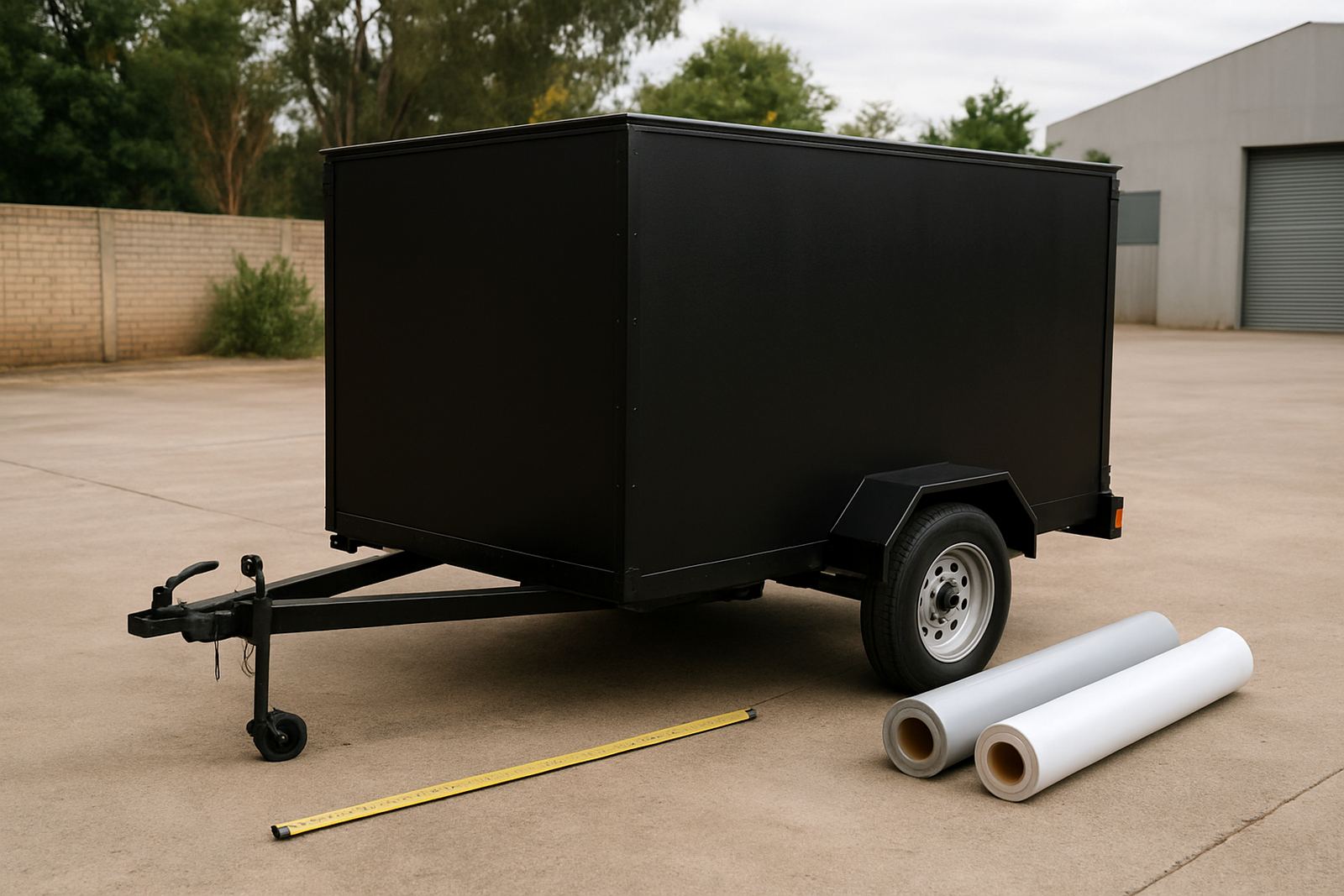
Before you talk colours, make sure the trailer body is suitable for wrapping. A clean, straight panel gives the best result. Dents, rust spots, old adhesive and cracked sealant will all show through if they are left untreated. For steel trailers, check for surface rust around hinges, rivets and lower corners. For aluminium panels, look for oxidation and any signs of previous repairs. If the trailer has been stored outside in Kya Sand, Midrand or on a coastal site in Durban, it may also carry grime, salt and old polish that must be removed properly.
The other question is simple: what is the trailer meant to do? A mobile display unit for expos needs a different finish from a work trailer that gets loaded with tools every day. If the unit is used for retail activations, you may want more branded coverage. If it is a transport trailer, partial branding around the sides, rear doors and nose cone may be more practical.
Choose Materials That Suit South African Conditions
Trailer wraps sit in direct sun for long periods, then get washed, dusted and parked again. In Johannesburg heat and inland winter cold, the material needs to cope with temperature movement. Coastal humidity can be tougher, especially on edges and around joints. Ask how the material handles prolonged UV exposure, road grime, and pressure washing. A good wrap should stay readable from a distance and keep its finish through daily use.
For trailers that carry heavy branding, material thickness and adhesive behaviour matter. Corners, curved roof lines and recessed panels all need careful planning. Trailer panels can be less forgiving than vehicle doors because they flex differently and often have more rivets, seams and trim pieces. If the wrap is going onto an enclosed display unit, think about whether you need matte, gloss or a textured finish for the look you want and the way the unit will be used.
- Ask for a material that is suitable for outdoor use and regular washing.
- Check how the film performs on rivets, trims and compound curves.
- Confirm whether the finish should be gloss, matte or satin.
- Allow for extra care on edges, door handles and loading points.
Measure the Trailer Correctly Before Any Print Run
One of the biggest mistakes with trailer wraps is working from rough measurements. A trailer body can look simple, but door seams, service hatches, marker lights and access points all affect layout. Measure every visible panel carefully and check the real usable space, not just the overall body length. If the unit has twin rear doors or a side access door, that needs to be built into the artwork from the start.
For fleet work, it helps to create a brand standard that can be repeated across several trailers. That keeps the fleet looking consistent whether the unit is in Sandton, Pretoria or on the East Rand. It also saves time when replacement panels are needed later. We often see operators underestimating how much the trailer shape affects the final layout, especially when logos, contact details and safety messages all need to be legible.
- Measure door gaps, latches, hinges, marker lights and vents.
- Check the trailer with doors open and closed.
- Plan the design around loading points and daily touch areas.
- Keep critical details away from seams and high-wear edges.
Think About Visibility, Parking and Municipal Rules
Trailer wraps are often seen first at a job site, in a parking bay or at a roadside stop. That means visibility matters both day and night. Strong contrast, clear phone numbers and simple wording are better than crowded artwork that people cannot read while moving. If the trailer is used for promotions or events, the sides and rear doors should carry the main message because those are the angles most people will see.
There is also the practical side of parking and display. Some business parks and municipalities are strict about trailers parked on verges, near driveways or in public view for long periods. A well branded trailer can support the business, but it should still be parked where it is allowed. If the unit is used in Durban or Pretoria on busy public roads, consider how the wrap will look after a week of dust, rain and stop-start traffic. A clean message helps, but the unit still needs regular washing and basic care.
Mobile Display Units Need a Different Level of Finish
Mobile display units are not just trailers with logos. They often open up at expos, carry lighting, storage, counters and product displays, so the wrap must work with the moving parts. Every flap, hatch and folding panel should be checked before production starts. If the unit has a serving window or a fold-out side, the artwork must line up when the unit is open as well as when it is closed.
For a launch in Midrand, for example, a food and drink unit may need graphics on all sides, plus internal brand colours and a clean interior wrap finish around counters. That way the unit still looks on brand when customers are standing right beside it. Interior restyling can make a big difference here, especially if the inside is visible through serving windows or open doors. Small errors in alignment are hard to miss on a display unit, so preparation matters more than ever.
Aftercare Matters If You Want the Wrap to Last
Once the trailer leaves the bay, the job is not finished. The first two weeks are important because the film settles during that time. Avoid aggressive washing, high-pressure spray right at the edges, and harsh chemicals. If the trailer has been on the road through load-shedding related night work, or parked under trees and in dusty yards, a gentle wash is still better than scrubbing.
Operators should also inspect the wrap regularly. Watch for lifting edges, stone chip marks near the lower panels and wear around handles or loading points. If the trailer also has window tinting, paint-protection film or wheel refurbishment on a tow vehicle, the whole setup should be checked as one fleet. That is usually the point where small issues are easiest to catch and cheapest to fix. A bit of aftercare goes a long way, especially on units that work hard every day.
A Johannesburg Example: One Trailer, Many Uses
A Kya Sand business using a single enclosed trailer for deliveries, expos and weekend activations will need a wrap that can do more than advertise. On weekdays it may sit behind a workshop, on Fridays it may head to Sandton, and on a Saturday it may be parked at a marketing event in Pretoria. In that case, the design should stay readable from a distance, the finish should be easy to clean, and the edges should be prepared for regular use.
That is why the right questions matter before any material is cut. What is the trailer built from? How often is it washed? Will doors be opened in front of customers? Does the unit need branding on both sides or only on one panel? Once those answers are clear, the wrap can be planned properly and the trailer can work as a practical part of the business, not just a moving sign.