
Start with the right wash routine, not the fastest one
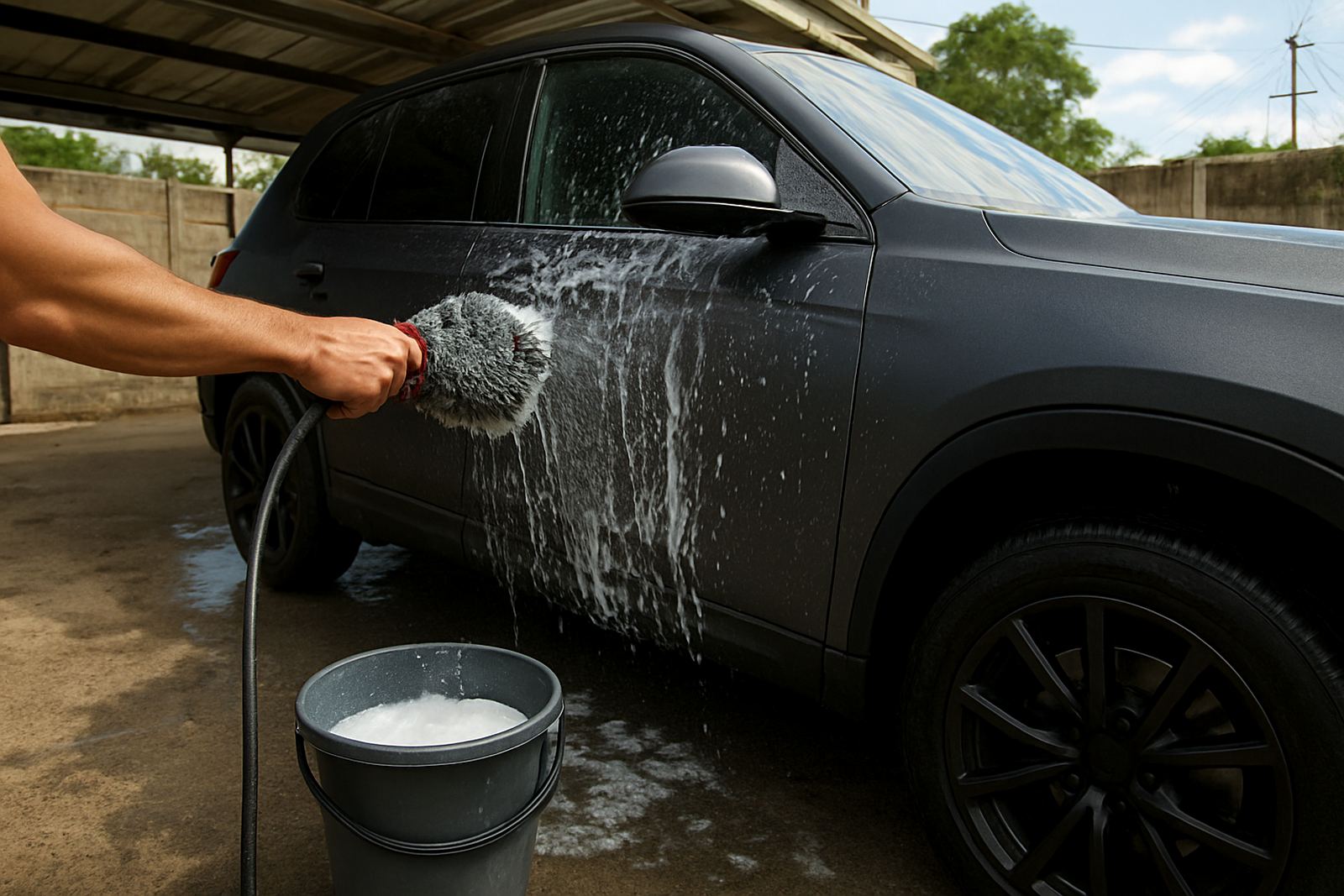
Wrapped vehicles do best with a gentle hand wash. That means cool water, a pH neutral car shampoo, soft wash mitts and separate buckets for rinsing. In Johannesburg, dust from the dry winter months and fine road grime from busy routes can sit on a wrap quickly, so leaving a vehicle dirty for too long makes the job harder the next time.
Before you touch the paint or film, rinse off loose grit. If you go straight in with a sponge, that dirt works like sandpaper. Use a low pressure hose or a rinsing lance from a safe distance and let the water do the first bit of work. Then wash from the top down so the lower panels, which are usually the dirtiest, do not drag muck across the rest of the vehicle.
- Use cool or lukewarm water only
- Choose a pH neutral shampoo made for vehicles
- Wash in the shade where possible
- Use a clean microfibre mitt, not a household sponge
Protect the edges, joins and printed graphics
The weak points on any wrap are the edges, seams and cut-outs around handles, badges and fuel flaps. Water forced under these areas can lift the film over time, especially on older panels or on vehicles that see long highway runs between Gauteng and surrounding towns. Printed graphics also need care because aggressive scrubbing can mark the surface or dull the finish.
When you clean these areas, use light pressure and short strokes. If there is tar, sap or sticker residue, soften it first with a wrap safe cleaner and wipe it away gently. Never pick at the corners with a nail or blunt tool. It may look harmless, but once a corner starts to lift it will catch dirt and need proper repair.
- Rinse the edges before scrubbing them
- Use a soft detailing brush around badges and trims
- Wipe in one direction rather than hard circular rubbing
- Check printed sections for staining after each wash
Keep pressure washers under control
A pressure washer can be useful, but only when used properly. The problem is not the machine itself, it is distance, angle and force. Hold the nozzle at least 40 cm away from the wrap and never aim directly at edges, seams or damaged areas. Strong spray at close range can force water under the film and start lifting, especially on older wraps or vehicles that have seen sun and hail.
For fleet vehicles, this matters even more because they are washed often and sometimes by different staff. One person using a nozzle too close can undo months of care. If your wash bay is in a windy area or in a yard with limited shade, let the vehicle cool down first. Hot panels and cold water are not a good mix. The sudden change can make cleaning harder and may leave marks on glossy finishes.
- Use a fan spray, not a tight jet
- Keep the nozzle moving
- Avoid spraying upward into edges
- Do not use pressure on lifted film or damaged corners
Dry properly so you do not leave marks behind
Drying is where many people do the most damage without noticing it. Air-drying a wrapped car leaves water spots, especially in hard-water areas and coastal humidity where moisture hangs around longer. In Pretoria and parts of the East Rand, sun and mineral deposits can dry onto the film fast, which makes the finish look patchy.
Use a clean microfibre drying towel or a soft silicone blade designed for vehicle panels. Pat the surface rather than dragging rough cloth across it. If you want a better result on matte or satin wraps, blotting is often safer than wiping. Pay attention to the mirror housings, lower doors and boot edges where water tends to collect and run back out later.
- Dry soon after washing, before water spots form
- Use different towels for body panels and wheels
- Open doors and boot lids to catch hidden drips
- Check creases and panel gaps before you finish
Treat stains, bird mess and tar as urgent jobs
Some contaminants should not wait until the next wash. Bird droppings, insect remains, tree sap and tar can stain a wrap if they sit for too long, and the risk is higher on lighter colours and printed graphics. A quick clean the same day is far better than trying to remove a hardened mark a week later.
For spot cleaning, soak the area with water first and use a wrap safe cleaner. Let it soften the dirt, then wipe gently with a fresh microfibre cloth. If the stain is stubborn, repeat the process instead of scrubbing harder. Solvents, petrol and rough polish are not the answer. They can cloud the film or pull at the print layer. Carefull handling now saves money later.
- Remove bird mess and sap as soon as possible
- Use soft cloths, not abrasive pads
- Test any cleaner on a small hidden area first
- Ask for advice before using tar remover on printed wrap
Build a wash plan that suits South African conditions
A family SUV parked in a shaded Bryanston driveway does not need the same routine as a courier fleet running from Kya Sand to Midrand every day. The right wash plan depends on where the vehicle sleeps, how often it travels and whether it sits in sun, dust or sea air. For businesses with several vehicles, a set routine helps keep the whole fleet looking consistent for customer visits and site calls.
As a general guide, wash wrapped vehicles weekly if they are in daily use, and sooner after long trips, rain mixed with dust, or heavy pollen. If you are near the coast, pay extra attention to salt and moisture. If you work through load-shedding and wash by hand after hours, make sure the area is well lit and that the vehicle is fully cool before you start. A simple routine is usually better than expensive products used badly.
Auto Wrap SA often sees vehicles that look tired only because they were washed too aggressively or left dirty for too long. A proper hand wash, a careful rinse and a dry finish will keep colour changes, printed branding and protective films looking professional for longer. For fleet operators, that matters on the road and at the client site. First impressions are made in traffic before the vehicle even stops.
- Weekly washing suits most daily-use wrapped vehicles
- Use more frequent rinsing after rain, dust or coastal driving
- Keep a written wash method for fleet staff
- Report lifting edges or damage early so it can be sorted before it spreads